
ABOUT US
Leading Northern Michigan in Wildlife Rehabilitation, Restoration, and EducationSleeping Bear Wildlife Fund will be a leader in Northern Michigan, supporting wildlife through rehabilitation services and sanctuary, through wildlife research and population restoration programs, and by working with the community through inspiring educational programs to nurture relationships with nature
Our MissionTo rehabilitate and restore Northern Michigan's wildlife and to connect people to nature.
Our VisionWe envision a thriving community of wildlife and habitats, and environmental stewards in Northern Michigan.

Our Three PillarsThrough rehabilitation, we serve wildlife that has been injured or severely disrupted by human interaction, often referred to as human-wildlife conflict. We take every opportunity to reduce human-wildlife conflict by offering guidance to the community on how to deal with possible sick or injured wildlife. If mediation is required, we work with professionals to treat the animal to prepare it for release back into the wild when possible.
REHABILITATION
Through restoration, we connect with statewide and local coalitions to support, innovate, and lead on programs to proactively support wildlife populations in their natural habitat and to restore wild landscapes to optimal quality for rehabilitated and reared animals to return to.
RESTORATION
Through education, we lead wildlife-centric education, outreach, and recreational opportunities for locals and visitors alike of all ages to learn best practices of wildlife interaction, importance of conservation, and respect for nature. In support of rehabilitation, we serve employees, volunteers, and partners through intensive staff training and career development opportunities.
EDUCATION

BOARD OF DIRECTORS
-

Samantha Wolfe
Co-founder | Co-chair
-

Justin Grubb
Co-founder | Co-chair
-

Breanna Hannula
Board Secretary
-

Danielle Grubb
Board Member
-
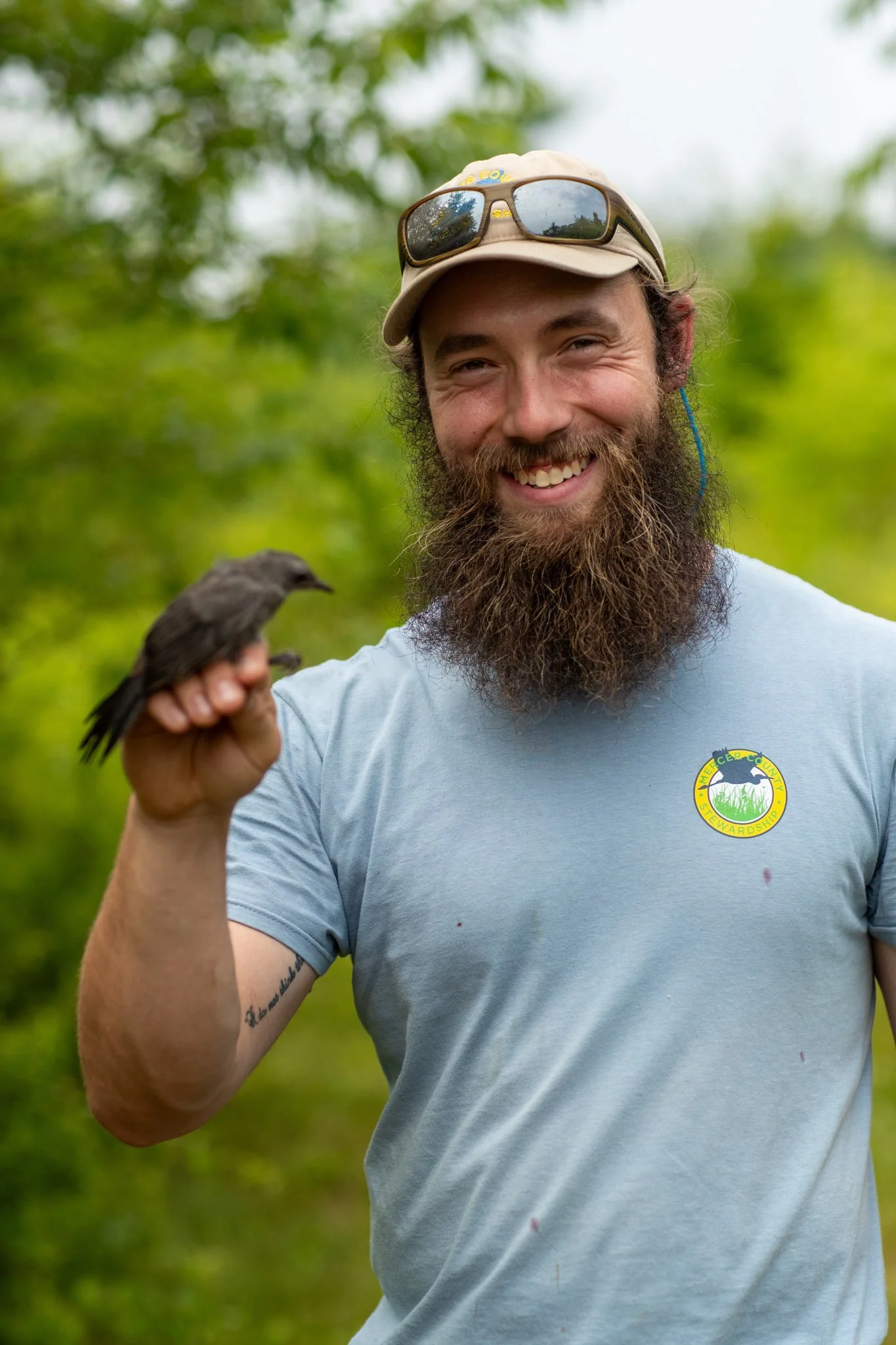
Ian Gray
Board Member
-

Justin Birkhoff
Board Member
-
A Growing Impact in Wildlife Rehabilitation
Our third season reiterated the growing demand for our services. We provided care for wildlife representing 13 different species, with intakes spanning 16 counties across Northern Michigan and transfers from additional partner regions. Supported by our dedicated staff and an incredible network of volunteers, we helped 167 animals through hands-on rehabilitation, referrals, or transfers to specialized facilities—giving each a greater chance at recovery and return to the wild.
Expanding Conservation Efforts
Beyond rehabilitation, Sleeping Bear Wildlife Fund continues to strengthen its commitment to habitat and wildlife conservation. In 2025, we expanded our ongoing trail camera and bluebird monitoring programs, helping to build a clearer picture of local wildlife populations and ecosystem health. These initiatives play a critical role in informing conservation strategies and fostering long-term stewardship of the region’s natural resources.
Investing in the Future of Conservation
In our third year of offering our internship program, we were proud to work with two outstanding interns from McGill University and Kalamazoo College. Both gained hands-on experience in animal care, data management, education, and research. This program continues to provide meaningful professional development opportunities while advancing our mission to cultivate the next generation of wildlife conservationists.
We are incredibly grateful for the support of our community, partners, and volunteers who make this work possible. Explore our 2025 Impact Report to see how, together, we are making a difference.
View Previous Years
-
A Growing Impact in Wildlife Rehabilitation
Our second season was a busy one, with 139 animals from 10 different species receiving care through rehabilitation, referrals, or transfers to specialized centers. Our dedicated team and network of volunteers worked tirelessly to provide lifesaving treatment across 11 counties, ensuring injured and orphaned wildlife had the best chance at recovery and release.Expanding Conservation Efforts
Beyond rehabilitation, Sleeping Bear Wildlife Fund is committed to preserving and restoring the natural habitats of Michigan’s northern lower peninsula. This year, we took a significant step forward in our conservation mission by launching two new initiatives focused on research and habitat restoration. These programs are designed to deepen our understanding of local wildlife populations and drive targeted efforts to help them thrive.Investing in the Future of Conservation
In 2024, we proudly launched our internship program, welcoming two dedicated interns who gained hands-on experience in wildlife care, data collection, education, and research. Each intern earned college credit while actively contributing to our mission. By fostering the next generation of conservationists, we are building a stronger foundation for the protection of Michigan’s wildlife for years to come.We are incredibly grateful for the support of our community, partners, and volunteers who make this work possible. Explore our 2024 Impact Report to see how together, we are making a difference!
-
Take a look at our first two years of impact by exploring our 2022/2023 Impact Report.
Our first season was a busy one with a lot of patients. We took in 23 different species from Antrim, Benzie, Emmett, Grand Traverse, Leelanau, Manistee, Mason, Montcalm, Newaygo, Osceola and Wexford Counties. With our dedicated team and network, we were able to assist 142 animals, whether through rehabilitation, transfer to additional services, or through humane treatment.
Landscape and Indigenous Acknowledgement
We recognize that our organization is built on Anishinaabe lands and that our namesake is directly related to indigenous folklore.
We share gratitude for the care and stewardship of the land over past generations and our sincerest goal is to continue this stewardship so that future generations may continue to have close connections with wildlife and their environment.