Back to the Wild: Bobcat Rehabilitation and Release in Northern Michigan
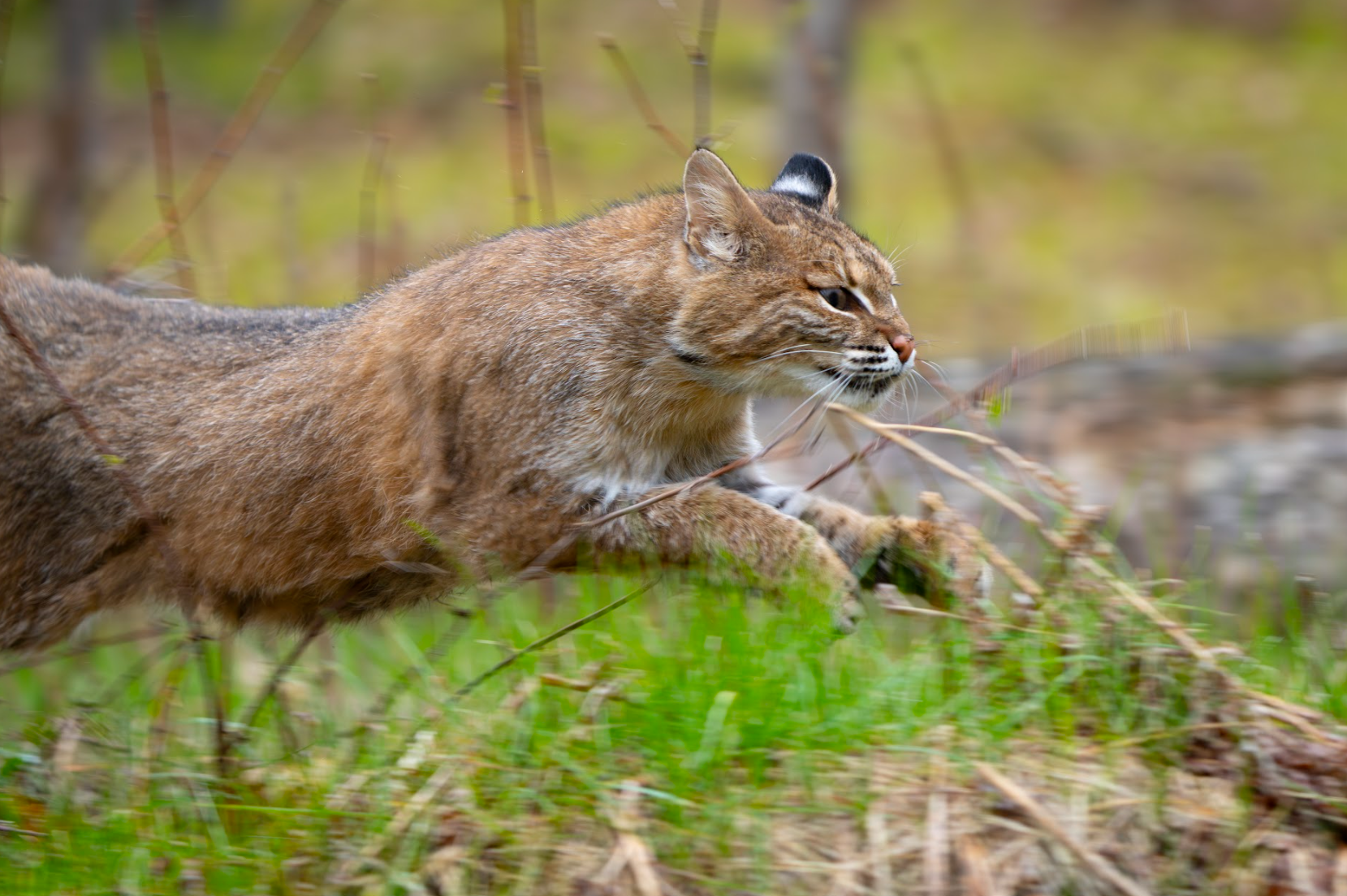
A young bobcat rescued in Traverse City by Sleeping Bear Wildlife Fund runs into the forest after being released back into the wild following a long recovery from two broken legs.
It was a chilly May evening beneath overcast skies. The wind was still, and the forest was quiet … until the bobcats arrived.
Snarling and growling from inside their respective crates, four young bobcats were carefully carried into the woods by teams from Association to Rescue Kritters and Sleeping Bear Wildlife Fund for their long-awaited return to the wild..
Their journey to this moment began months earlier.
For one bobcat in particular, their journey began In September of last year, when Sleeping Bear Wildlife Fund received a call from a marina on West Bay that reported a young bobcat in their parking lot. The kitten appeared alone and disoriented, and staff feared he may have been injured. When our team arrived, they quickly located the animal hiding between the dumpsters.
It was immediately clear something was wrong.
Despite clear injuries, the young bobcat was stressed and scared, and still attempting to avoid capture. The team took a moment to strategize, and then carefully cornered and captured her with towels and a net before quickly transferring her to a carrier and covering it to reduce stress. Even a debilitated juvenile bobcat is still a fierce predator.
With the help of a generous transport volunteer who met our team in Kingsley, the kitten was taken to ARK for emergency evaluation. It was clear that his hind legs were broken, and the severity showed up clearly on X-ray. Everyone involved jumped into action, and the kitten was transferred to West Michigan Wildlife Center, where Dr. Vincent addressed the bobcat’s injuries.
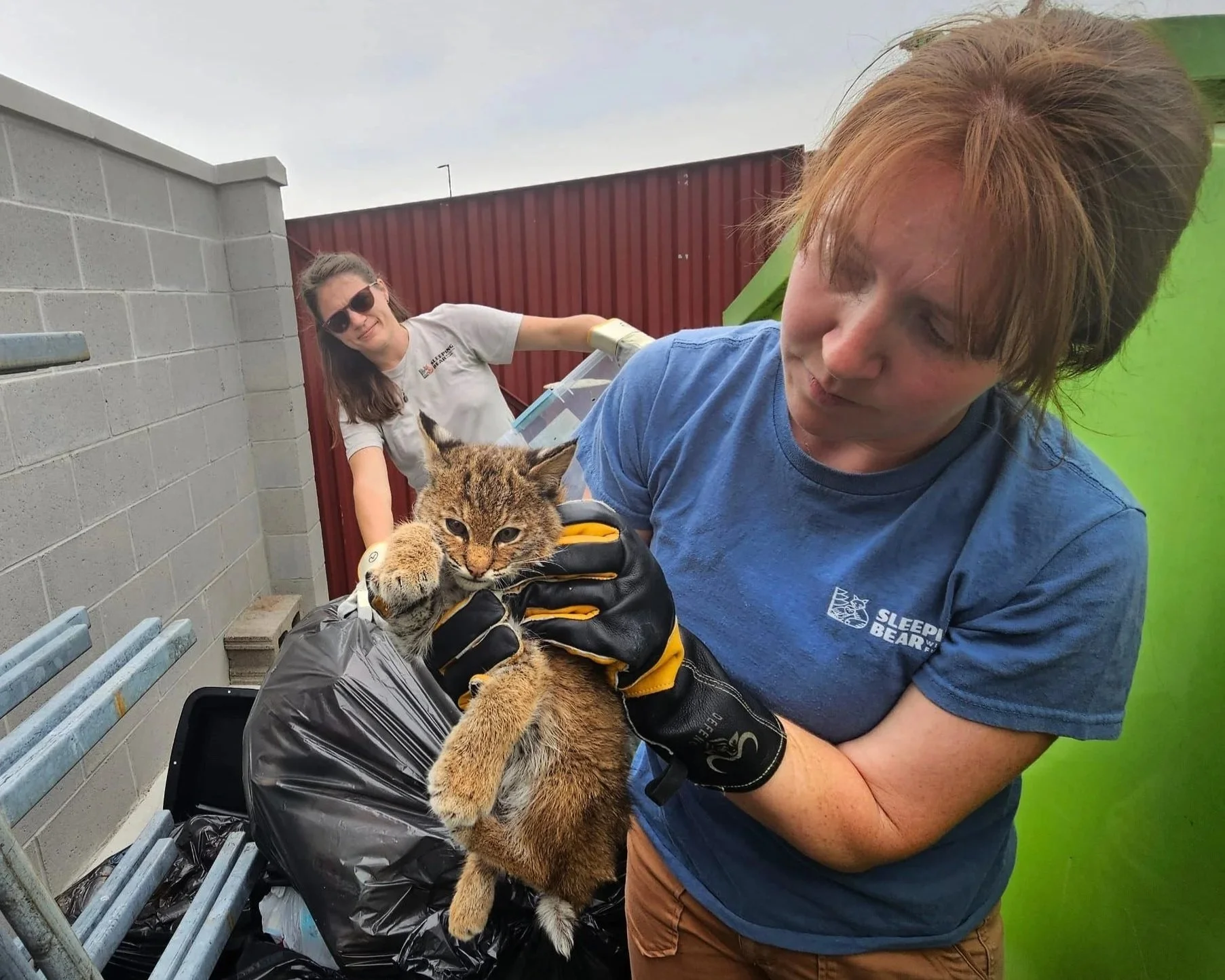
Board members Danielle Grubb (right) and Samantha Wolfe (left) recover the young bobcat from behind a dumpster.
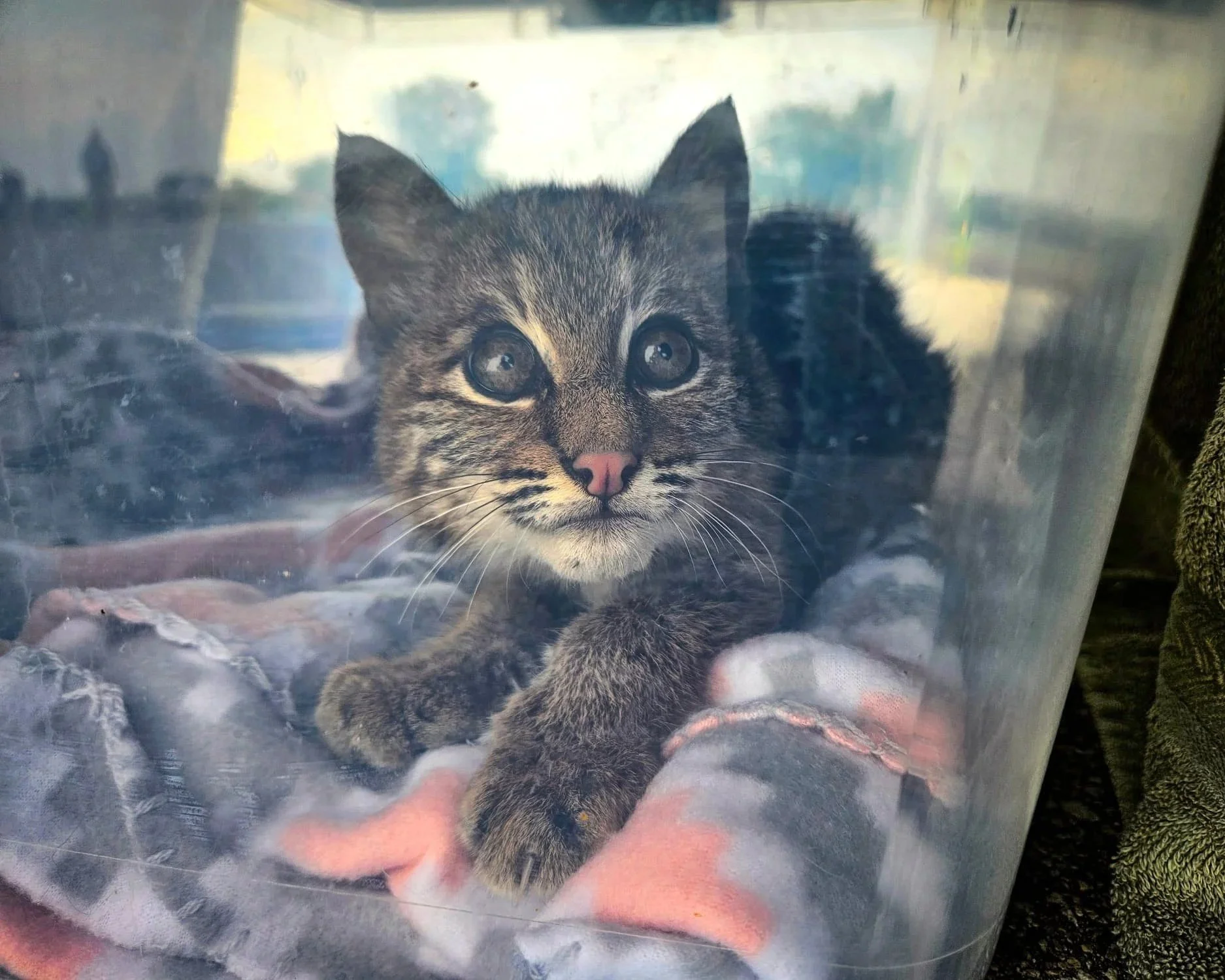
The young bobcat secured in a tote, ready for transport to ARK for further assessment and treatment.
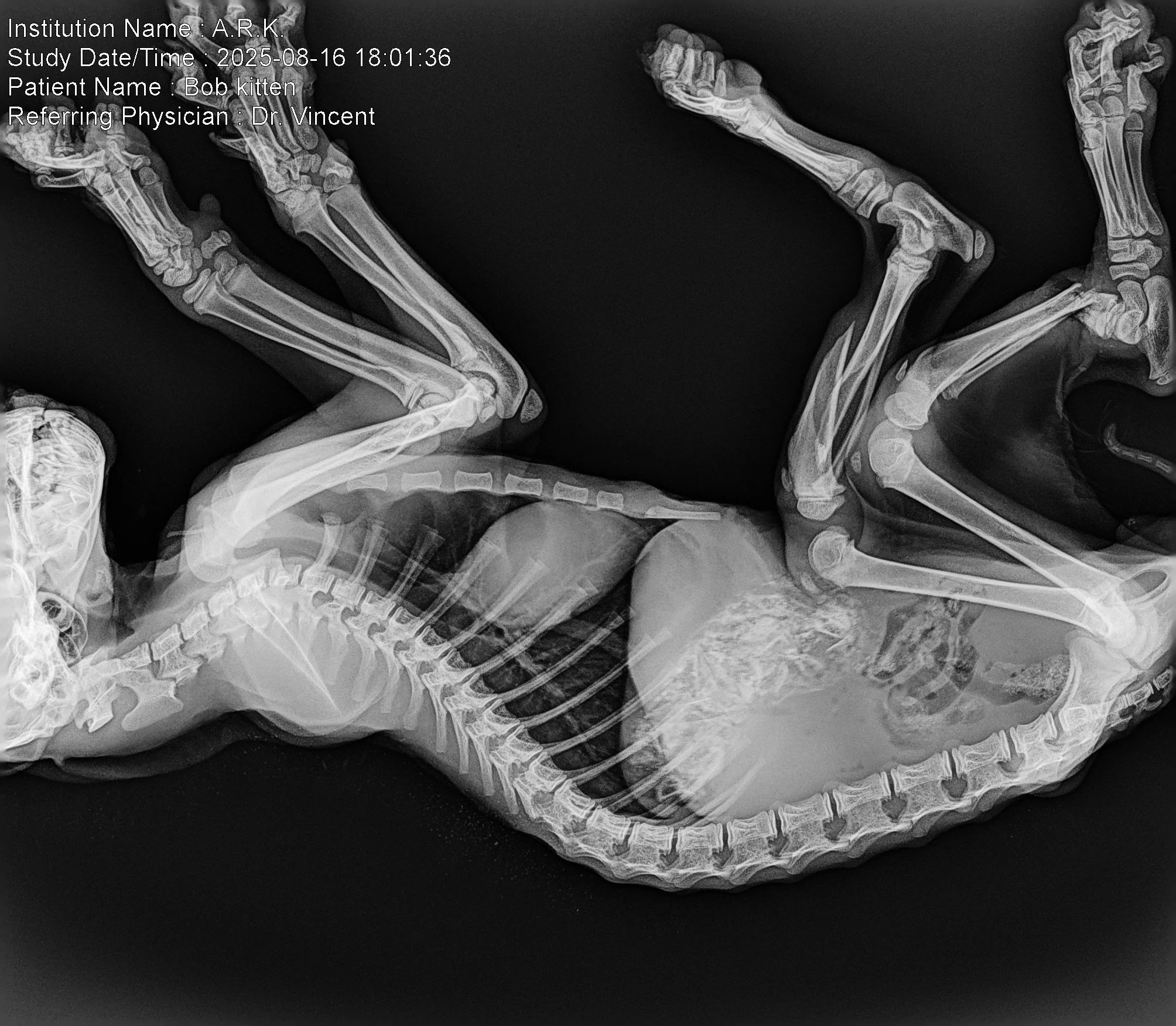
The X-ray of the bobcat showing two fractured hind legs (Fibula and Tibia in both back legs).
Recovery for a wild bobcat is never simple. Every step had to balance medical care with the need to keep the animal wild and minimize human interaction. Between immediate recovery and therapy with WMWC to ensure his range of motion and the longer process of growing up with volunteers at the ARK, we knew the fierce little predator was in excellent hands.
ARK took in not one or two, but four bobcats in 2025, so together, this little band of foster siblings developed natural social behaviors they would experience in the wild. Throughout rehabilitation, the team carefully avoided habituation by limiting human interaction. As the bobcats matured, they became increasingly defensive and less tolerant of human presence, an important sign they were developing the instincts they would need in the wild. Once the long Michigan winter subsided and spring began to set in, the bobcats were ready to get outside and efforts began to identify and coordinate suitable release sites where they would be safe and away from human development pressure.
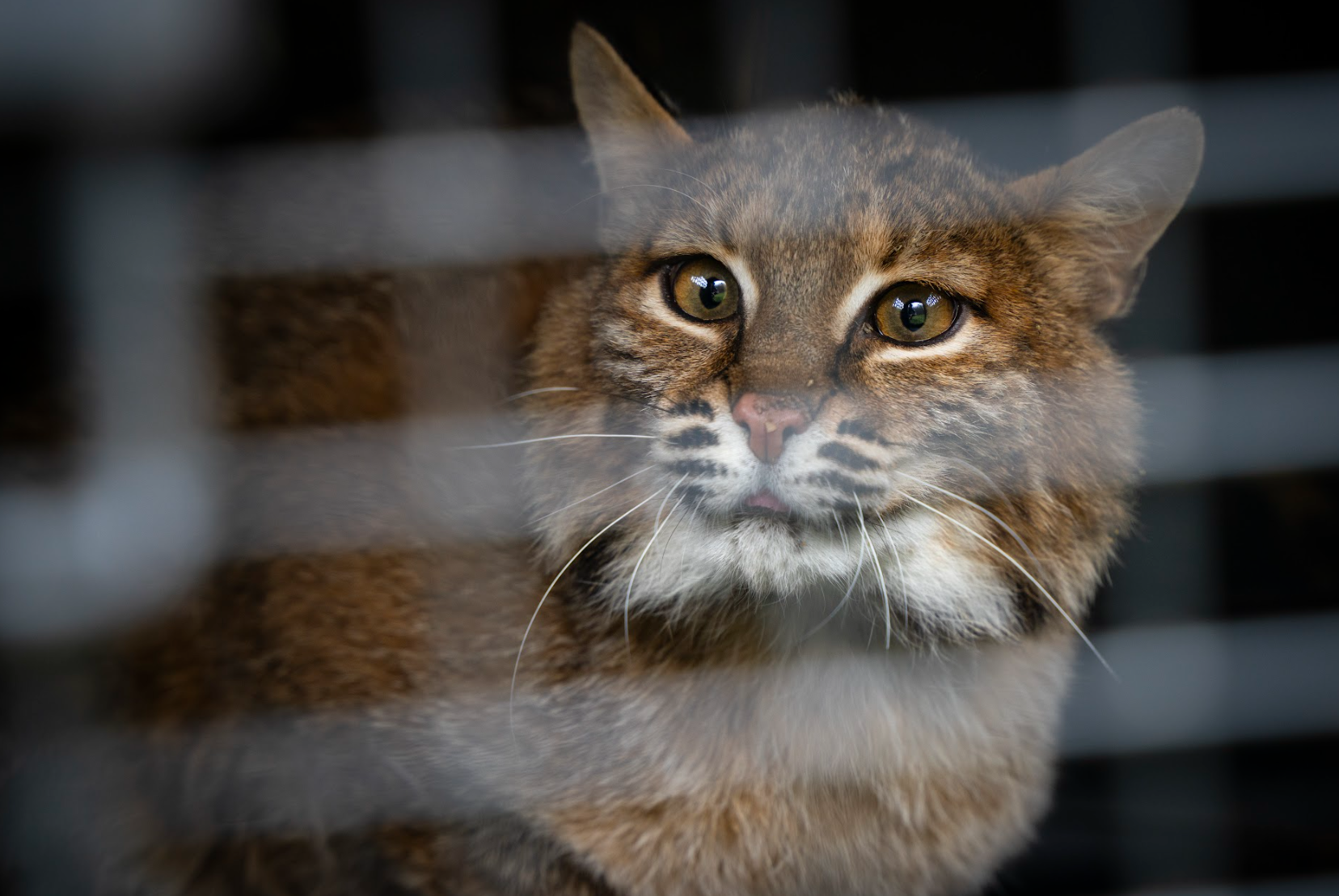
The young bobcat right before release.
Which brings us back to that moment in mid-May.
The crates were positioned near a small opening leading into dense brush and thick vegetation, the bobcats were released one by one, but close enough together to quickly relocate one another after entering the forest. Though bobcats are typically solitary animals, young individuals will often remain near siblings - or in this case, companions raised together - until they are ready to disperse on their own. The moment the crate doors opened, the bobcats rushed into the undergrowth, sprinting toward the trees as fast as they could without ever looking back, disappearing almost instantly into the wild where they belonged.
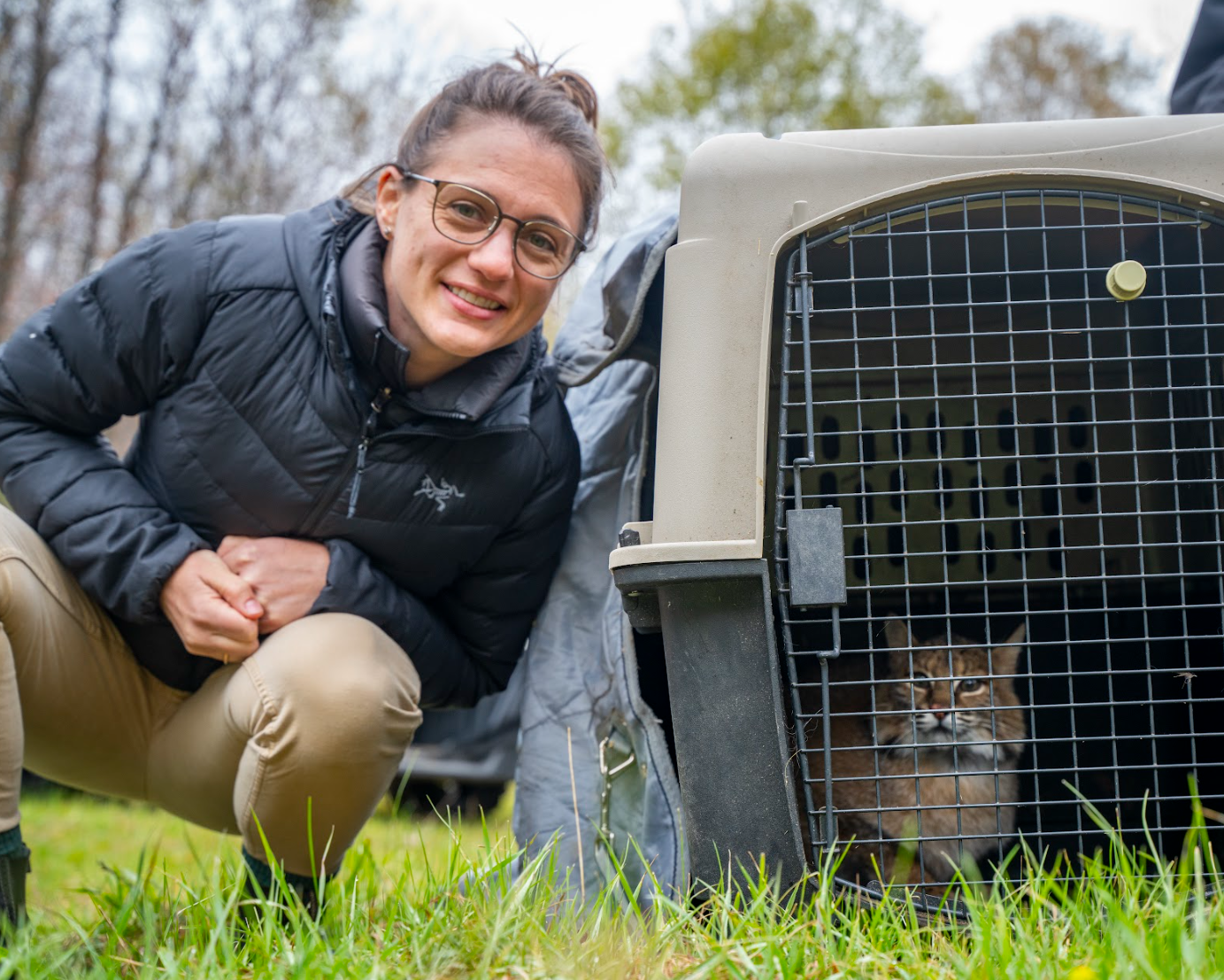
Board Co-chair and Co-Founder Samantha Wolfe with the bobcat.
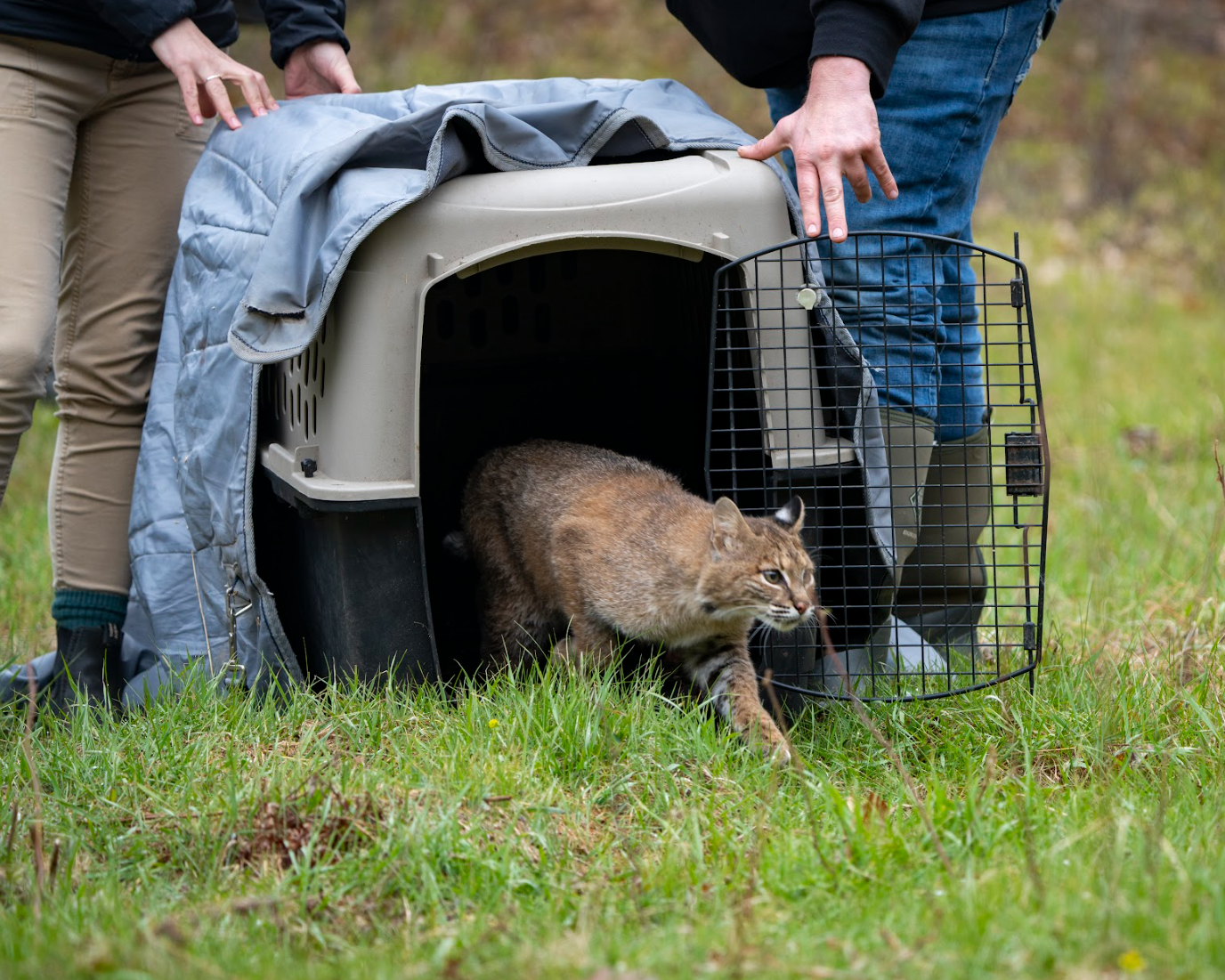
The young female bobcat being released from her crate.
The bobcat is one of Northern Michigan’s most elusive and important predators, playing a critical role in keeping ecosystems healthy and balanced. As a mid-sized wild cat, bobcats help manage prey populations from the top down by hunting animals such as rabbits, squirrels, mice, birds, reptiles, amphibians, and other small mammals. Their presence is often a sign of a healthy forest ecosystem with enough habitat and prey to support wildlife. Bobcats are highly adaptable and can live in forests, wetlands, swamps, and even areas near farmland, but they rely heavily on thick cover and undeveloped habitat to hunt and avoid people. Mostly active at dawn, dusk, and throughout the night, they are extremely stealthy and are rarely seen in the wild despite being found throughout much of northern Michigan.
Bobcats are solitary animals and spend much of their lives alone, quietly moving through large home ranges marked with scent and scratch marks. They are excellent climbers, swimmers, and ambush hunters, using patience and camouflage to sneak close to prey before attacking. It is important to always give them plenty of space and never attempt to approach or feed them. If you encounter an animal that appears injured, orphaned, or behaving unusually, contact a licensed wildlife rehabilitator or conservation professional before intervening, as young bobcats especially can appear alone temporarily while their mother is hunting nearby.
Though sightings are uncommon, seeing a bobcat in the wild is a special reminder of the wild spaces that still exist in the region. We were grateful to be a part of this kitten’s story - both because it is a reminder of what a wonderful area we call home and how fortunate we are to share this region with such incredible native wildlife, and because this story highlights how a small network of dedicated people can make such a difference.
Learn More
Learn more about bobcats through our wildlife research efforts and how we use trail camera surveys to better understand local animal populations, habitat use, and the hidden behaviors of wildlife across Northern Michigan.
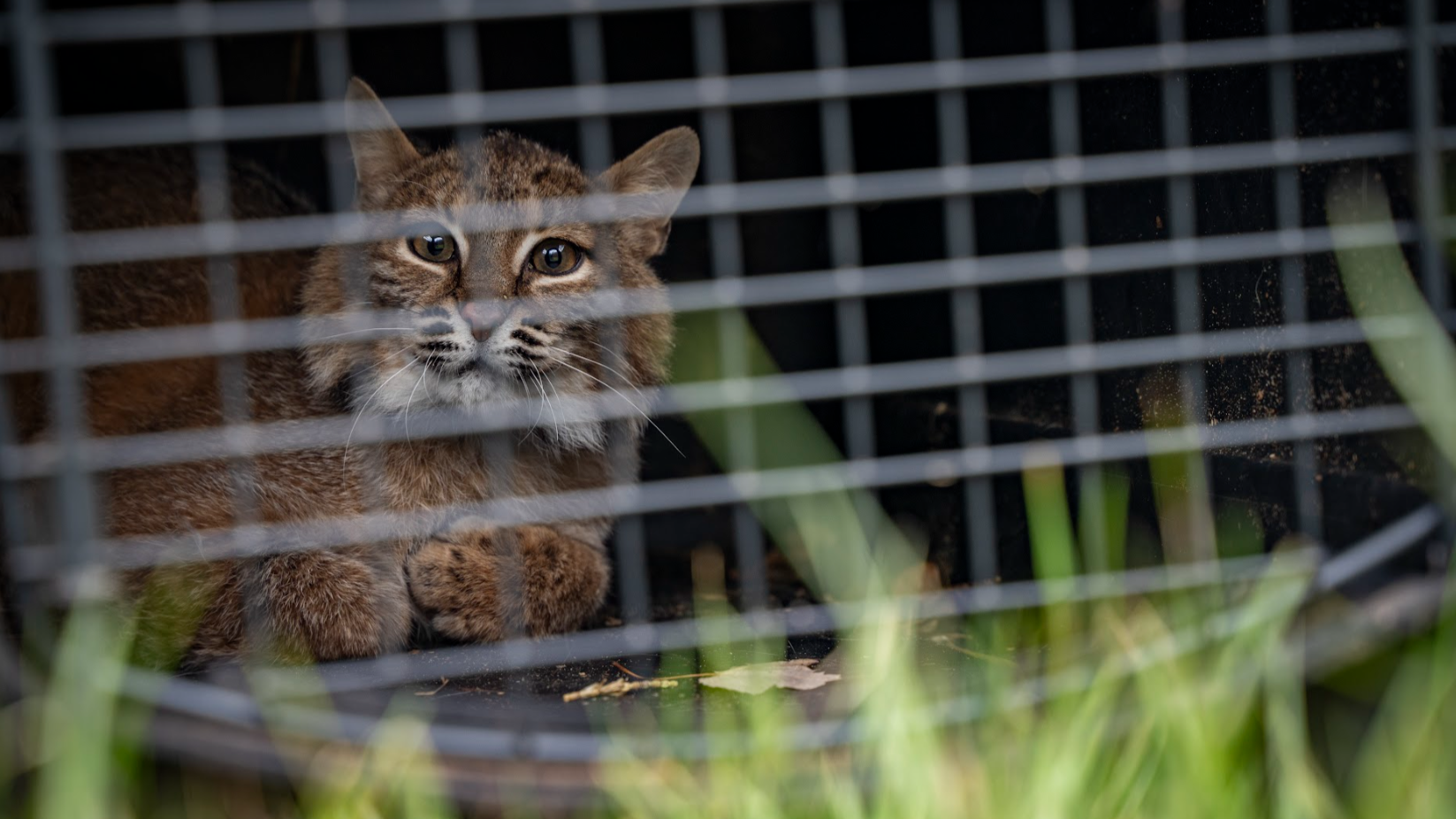
Learn more about our wildlife rehabilitation efforts, our approach to caring for native species, and how you can help support healthy wildlife populations in your community.