AMERICAN TOAD
Anaxyrus americanus
Ojibwe: obiigomakakii
American Toads of Northern Michigan
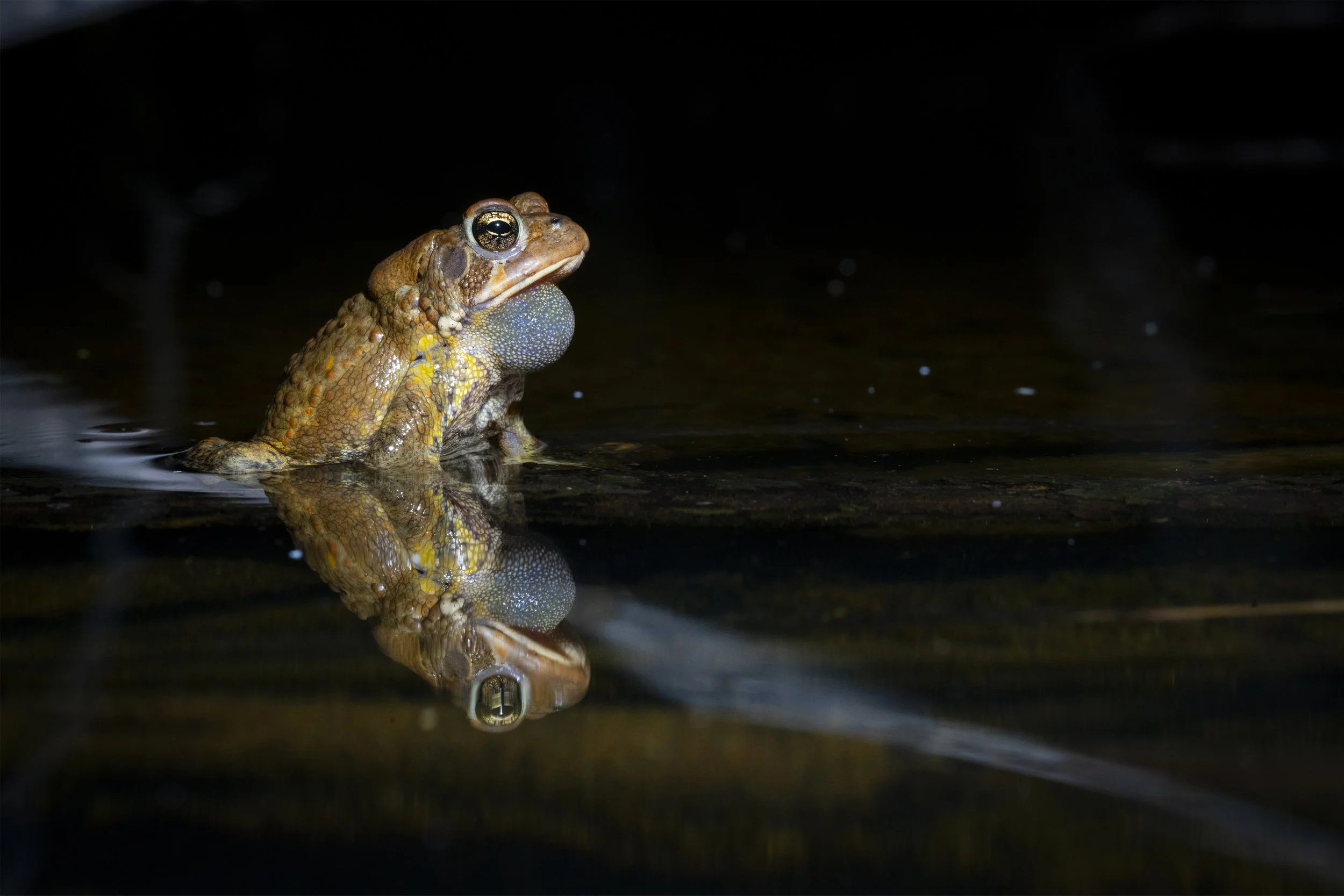
The American toad is a common amphibian known for its long, musical trill heard on spring and early summer nights. Males produce this sound by pushing air from their lungs across their vocal cords, inflating a throat sac that acts as a resonating chamber—amplifying and sustaining the call with minimal energy. The steady trill is made up of rapid pulses that create a continuous tone, and its pitch and duration help females identify strong, healthy mates. These calls often carry far across wetlands, making them a familiar and reliable sign of active, healthy ecosystems.
The Call of the American Toad
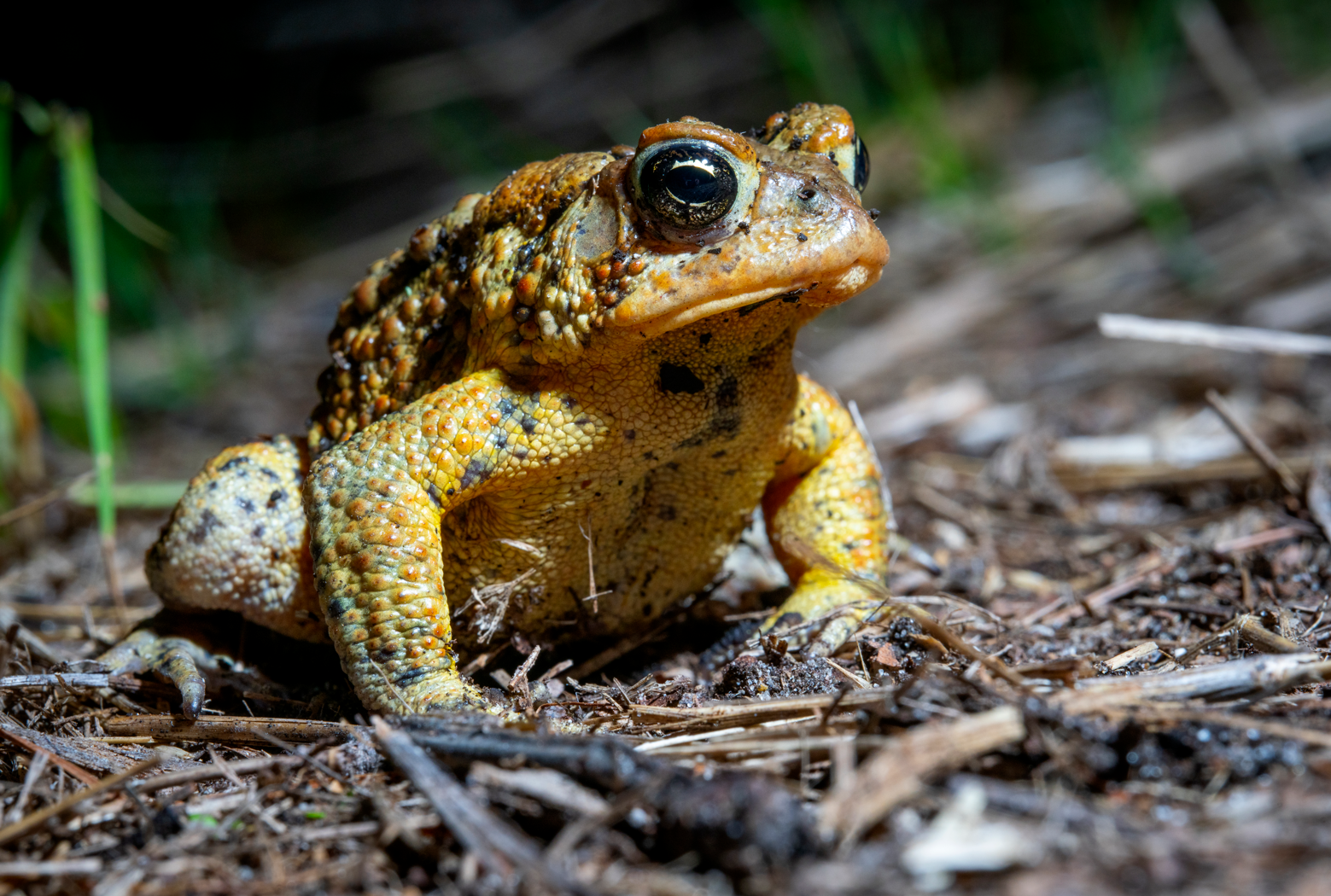
In Northern Michigan, the American toad is a familiar and important part of forests, wetlands, and even backyard ecosystems. These adaptable amphibians play a key role as natural pest controllers, feeding on insects like beetles, ants, and mosquitoes, helping keep ecosystems in balance. In turn, they are an important food source for snakes, birds, and mammals, making them a vital link in the food web. American toads have a fascinating life cycle, beginning as strings of eggs laid in shallow water in spring, which hatch into tadpoles and transform into tiny toadlets within a few weeks. Unlike many frogs, they can tolerate drier habitats thanks to their warty skin and ability to burrow into soil during the day. Their presence is often a good indicator of healthy habitats, as amphibians are especially sensitive to changes in water quality and environmental conditions.
Toads in your Backyard
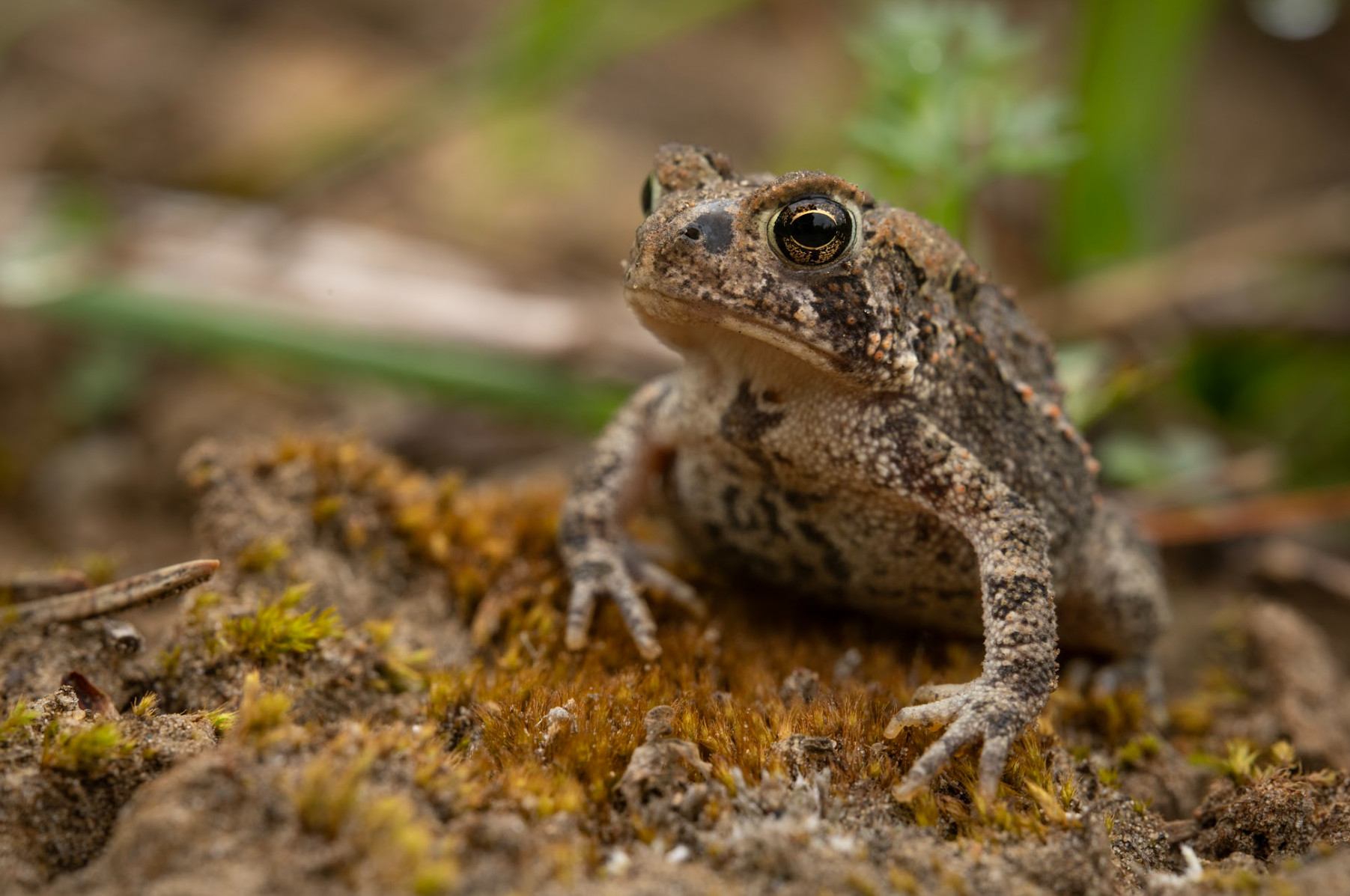
Helping American toad and other toads in your backyard is simpler than you might think. Start by creating a toad-friendly habitat: leave patches of natural cover like leaf litter, logs, or native plants where they can hide during the day. Avoid using pesticides and herbicides, since toads absorb chemicals through their skin and rely on insects for food. If you have space, consider adding a shallow water source or small garden pond with gently sloped edges so they can safely enter and exit. Turning off outdoor lights at night can also help maintain natural insect patterns and reduce predation risks. Even small changes like these can make your yard a safe refuge for toads and support a healthier local ecosystem.