Bluebird Nest Box Program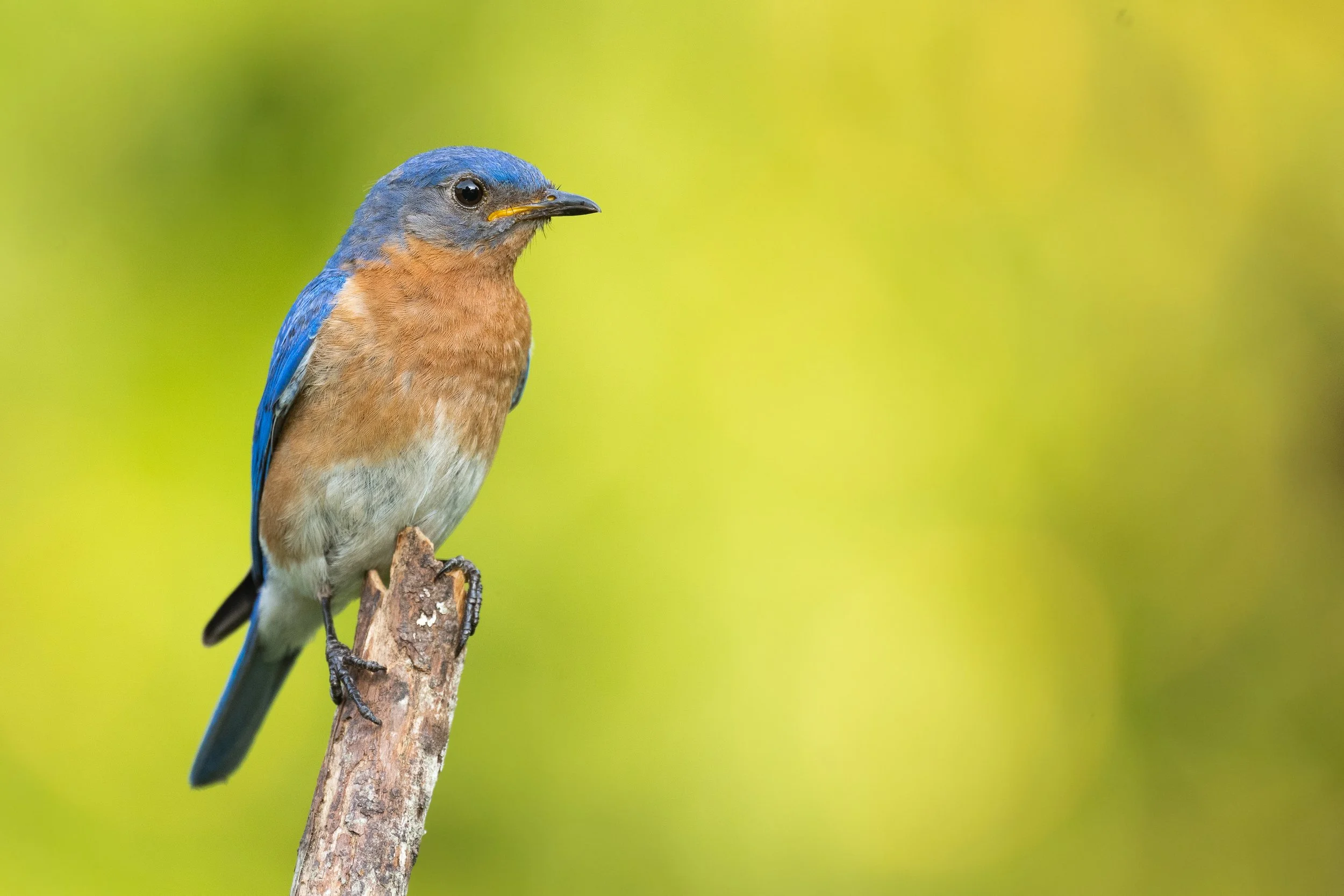
Providing Nesting Habitat for Local Bluebirds
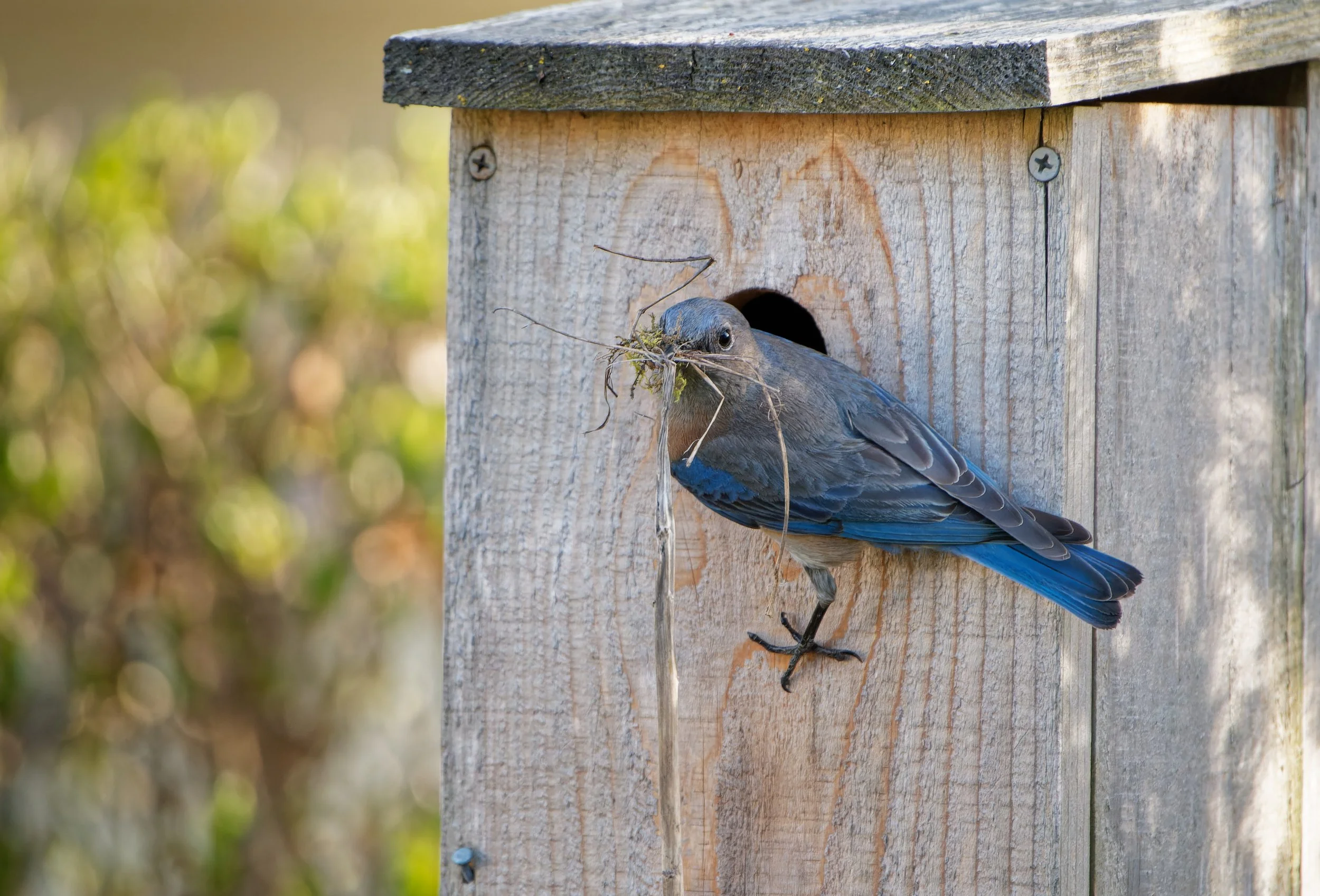
Eastern bluebirds are small, colorful birds admired for their natural beauty. Males display vibrant blue feathers with orange-brown chests, while females have softer gray-blue hues. Found throughout eastern North America, including Michigan, they inhabit open areas like grasslands and meadows, nesting in tree cavities, wooden fences, or birdhouses. These birds perch on wires and posts near their nests. Eastern bluebirds forage for insects such as caterpillars, beetles, and spiders, but switch to fruit and berries in winter. They face predators like cats, snakes, and raccoons, and compete for nesting space with non-native species like House Sparrows and European Starlings. Known for their low-toned, warbling songs and soft whistle-like calls, their vocalizations play a key role in breeding and communication.
Sleeping Bear Wildlife Fund is working to provide additional nesting space for these animals by working with the community and creating specially designed houses that are deployed among neighborhoods, libraries, and schools in Benzie County to allow students and community members to connect with the species and other songbirds.
Nesting Box Care Information
Already have a nest box or have created one during one of our various programs? Access your all-in-one care guide here to learn about maximizing the success of having your own pair of nesting songbirds.
Making your own box?
Are you interested in making your own bird box and providing habitat to various species of cavity nesting songbirds? Download our instructions here and create a perfect home for songbirds in our backyard today.
Community Outreach and Nest Boxes

During installation at local schools, classroom presentations are conducted so students would learn about the bluebirds and other birds as well as the importance of their habitat and general conservation.
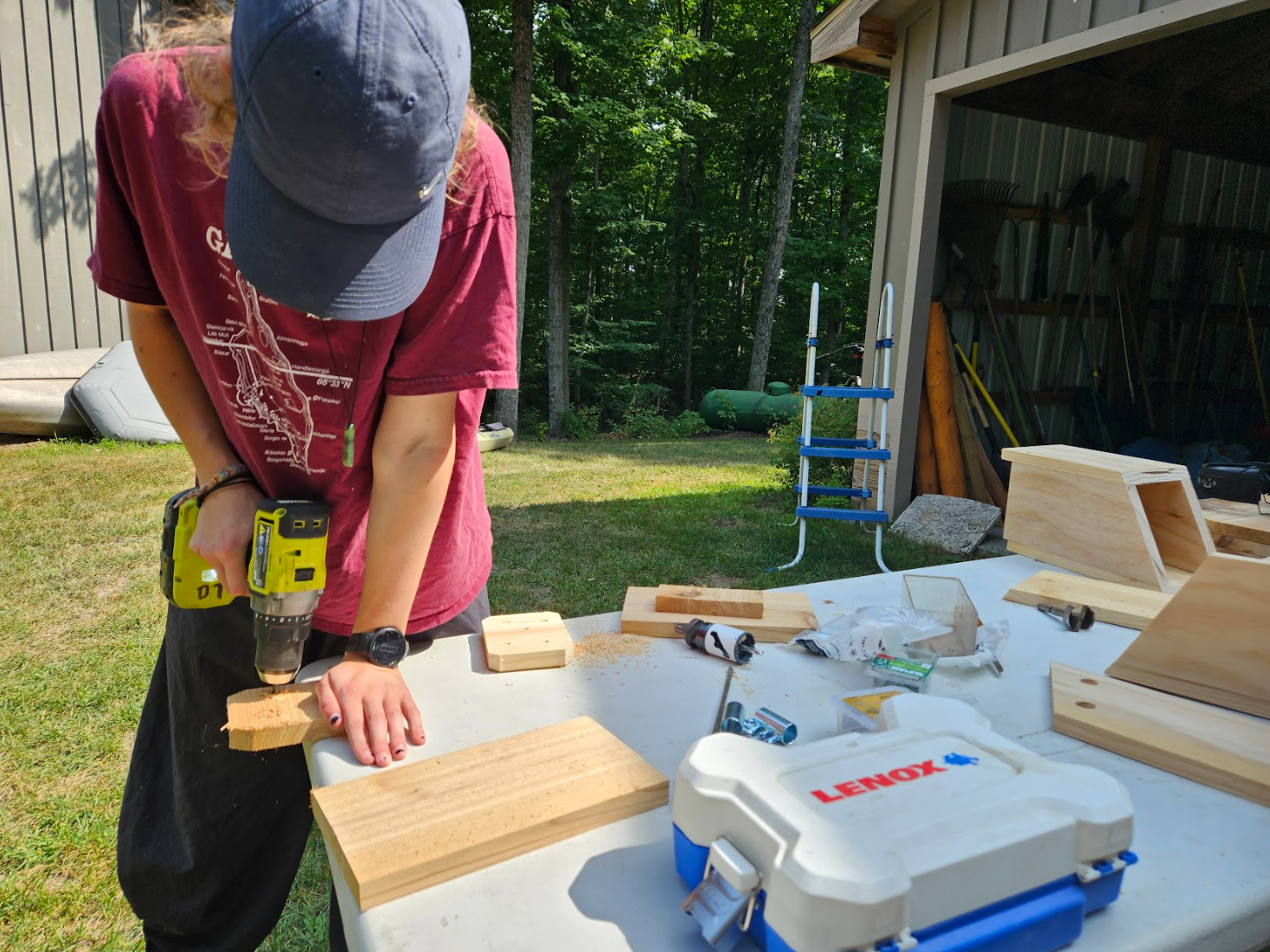
Interns learn to construct bluebird boxes in order to contribute to the ongoing conservation of songbirds and learn skills in using power tools.

several bluebird boxes have been strategically placed near local schools, adjacent to prime bluebird habitat, providing a safe and supportive environment for the birds to flourish in areas previously impacted by development.
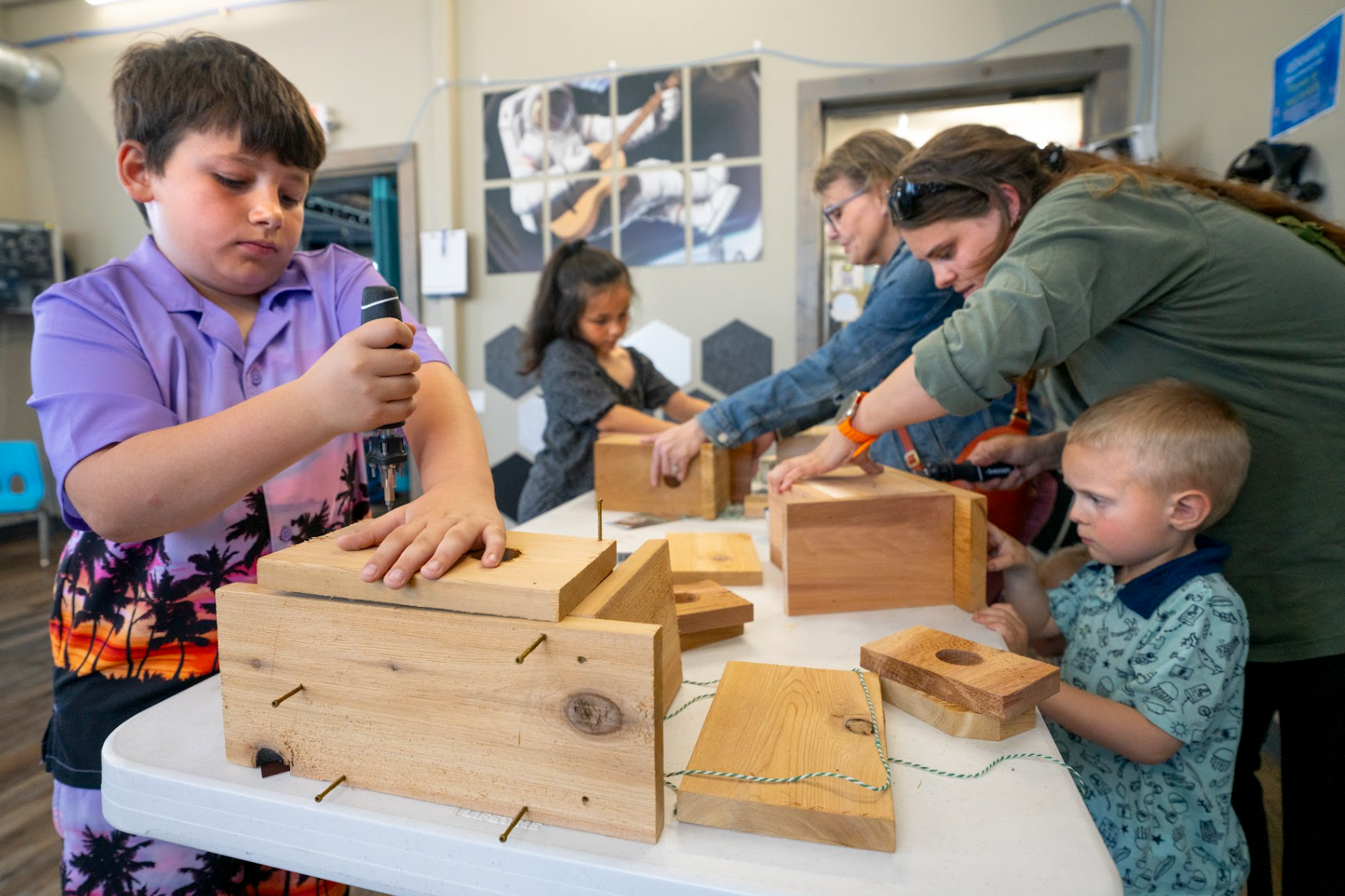
Participants in bluebird box building programming construct their very own bird house and learn about the care that goes in to maintaining a house to protect songbirds.

Students are taught about how to maintain the next boxes for the spring as well as how the bluebirds locate proper nesting areas to raise their chicks.
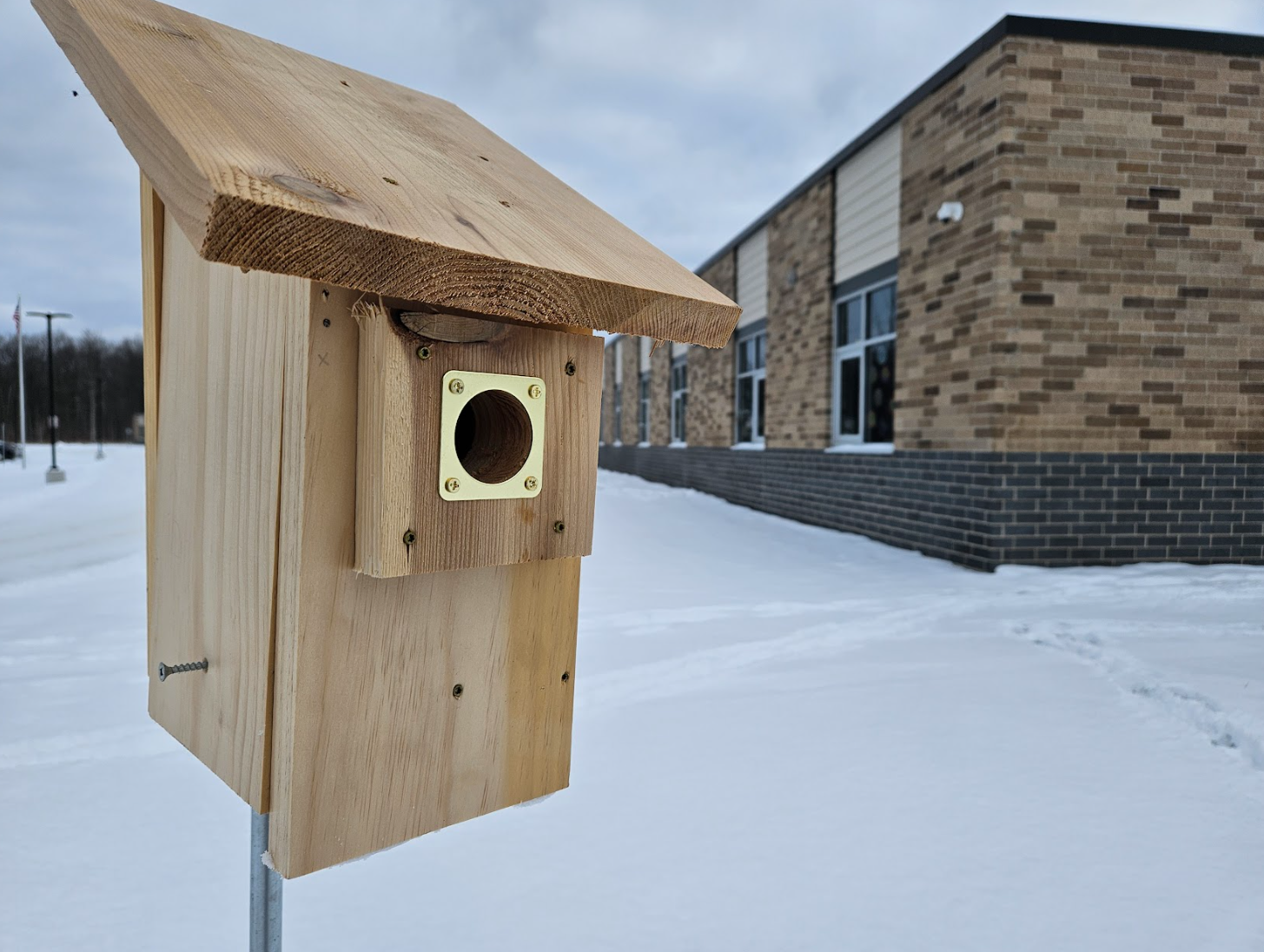
Several bird boxes are outfitted with nest cameras that are connected to WIFI and are able to allow students to view the nesting progress of the species that are nesting in each box.
Bluebird Nest Live: A Window into Nature
Each of the bluebird boxes contain a special camera that is connected to each school to allow students to get an inside view of the bird houses, allowing students to connect to the natural history and life cycle of the blue bird boxes. These cameras coincide with lesson plans that were developed by Sleeping Bear Wildlife Fund that teachers will deliver over the course of the nesting season.
Sponsor a bluebird box
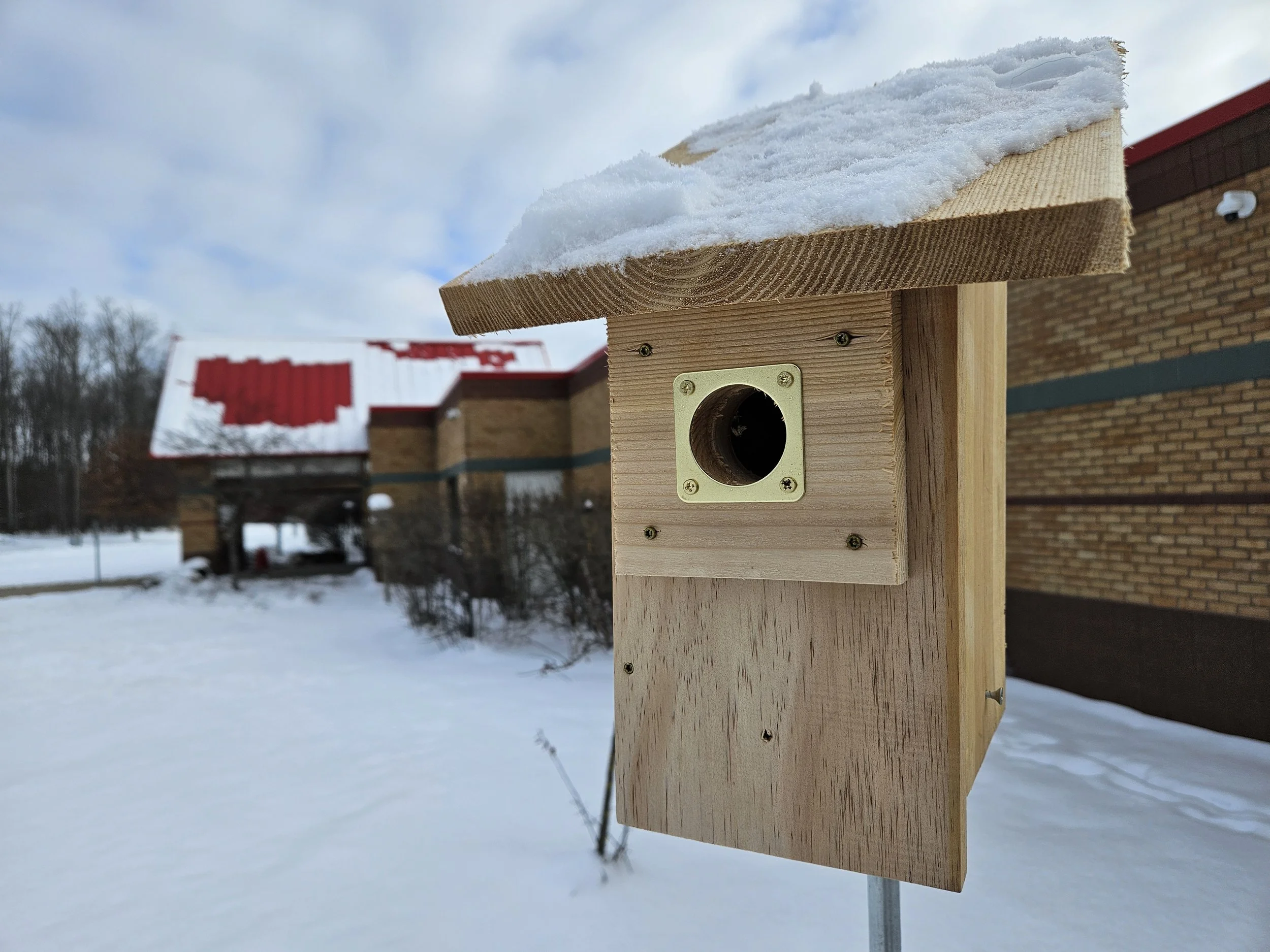
This project is ongoing, and we will be looking to add additional bluebird boxes to the region, specifically through school partnerships. If you are interested in sponsoring a bluebird box for $250.00 USD, follow the donation button and specify that you’d like to support this program in the comments.
This research is generously supported by and done in partnership with the