
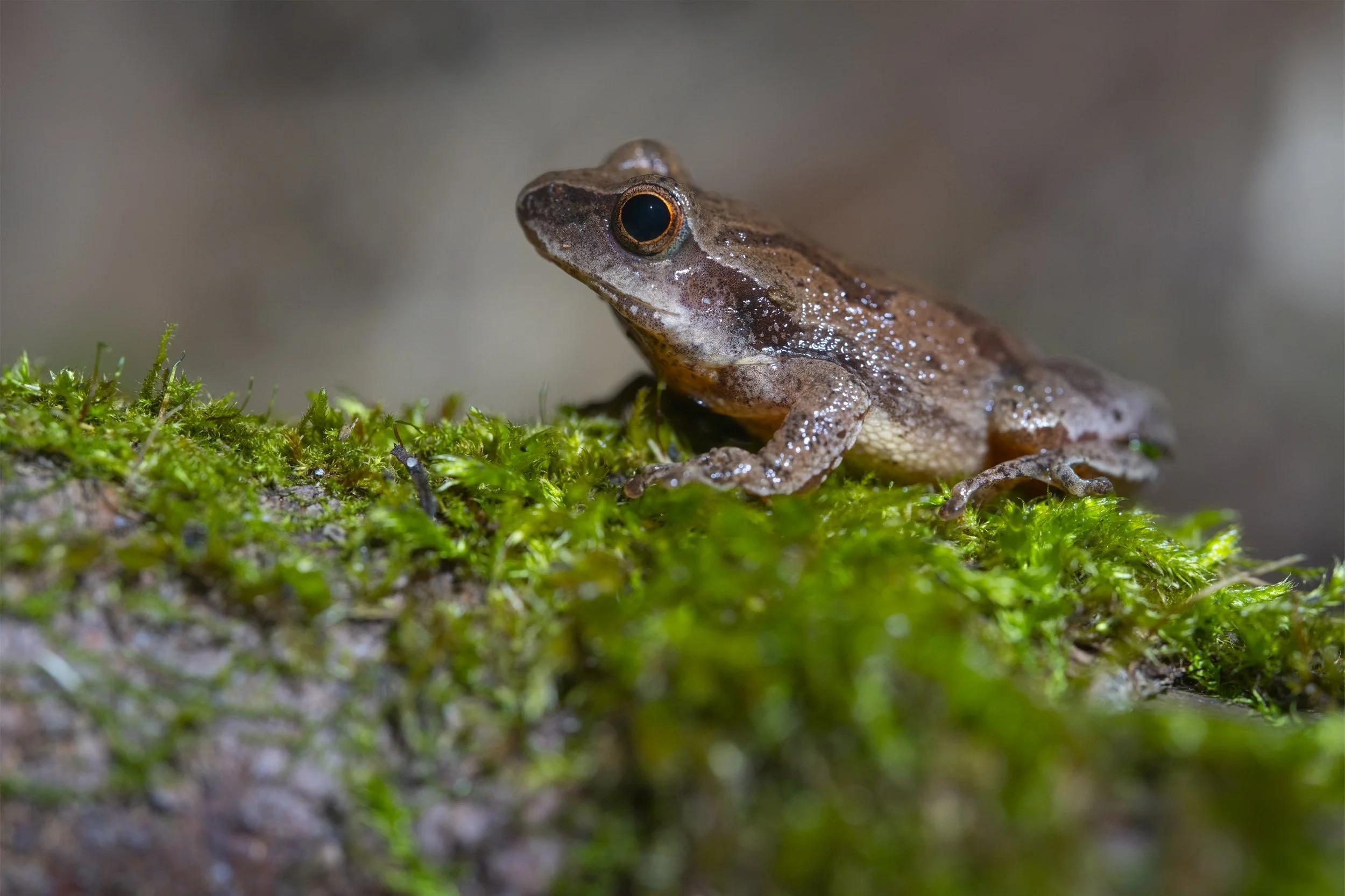
SPRING PEEPER
Pseudacris crucifer
Ojibwe: Giziibwewed
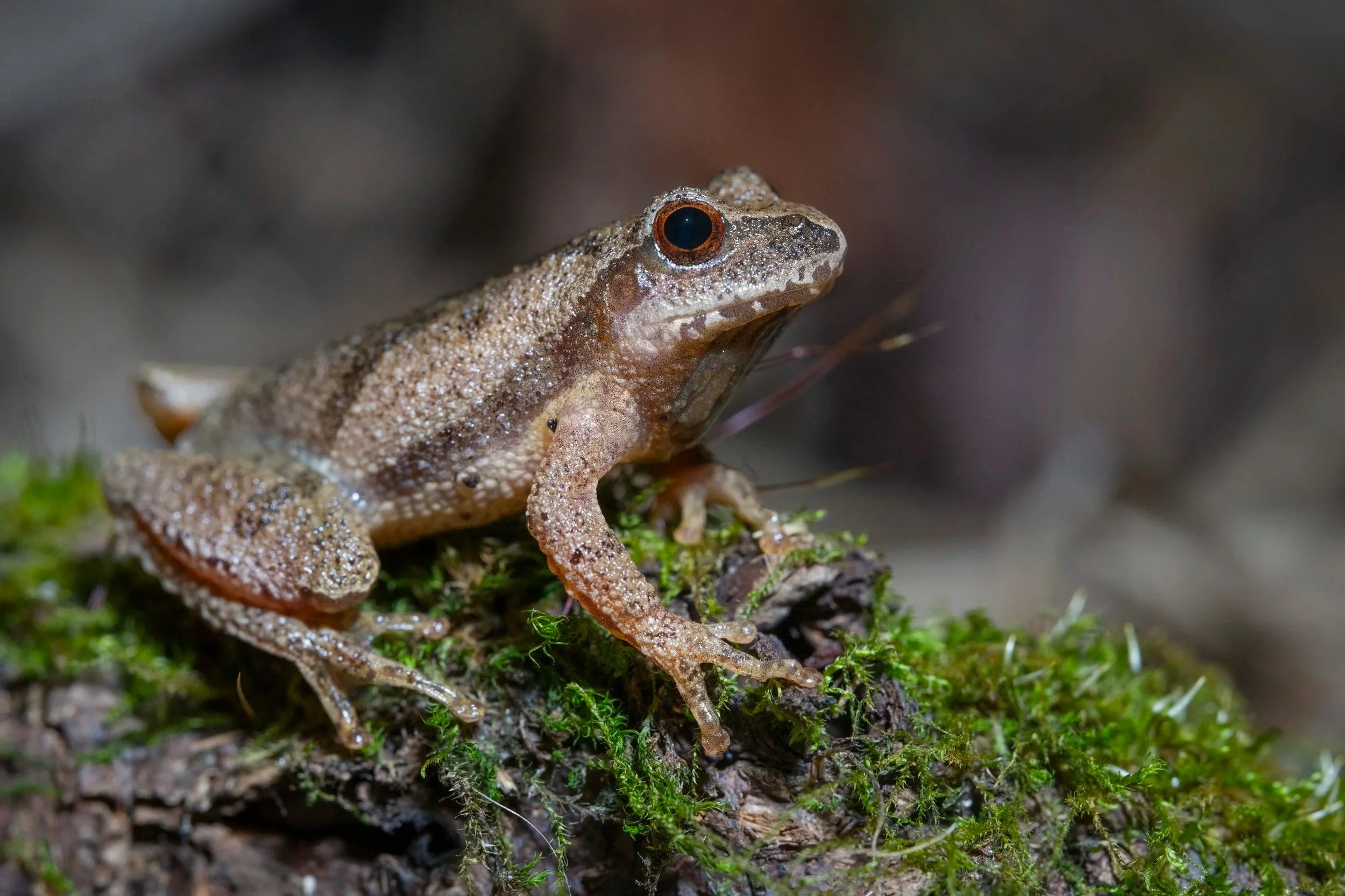
Spring peepers of Northern Michigan
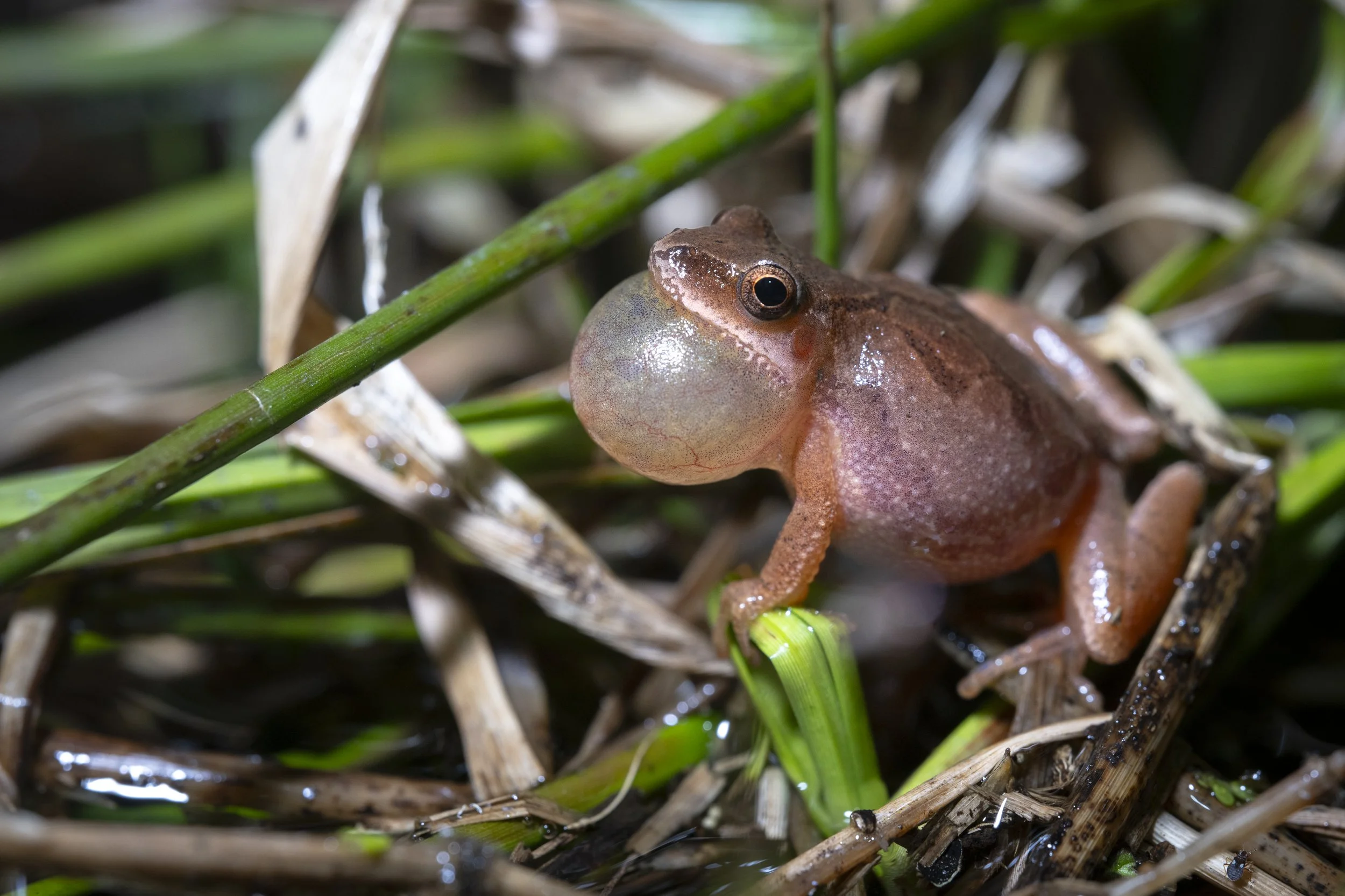
Males produce the characteristic “peep” call by pushing air from their lungs over their vocal cords, inflating a round throat sac that acts like a resonating chamber to amplify the sound. Each “peep” is a quick burst of sound, but when many males call together, it creates a loud, continuous chorus that can carry surprisingly long distances. The pitch and repetition rate of the call can signal the male’s size and condition, helping females choose mates. This chorus is not just a seasonal soundtrack—it’s a powerful example of how small animals use sound and physics to communicate effectively across their environment.
The Call of the Spring Peeper
In Northern Michigan, the Spring peeper is one of the first signs of spring, filling forests and wetlands with its high-pitched “peep” on warm evenings. Despite their tiny size, these treefrogs play an important role in the ecosystem as insect predators, feeding on small invertebrates and helping maintain balance. They are also a key food source for birds, snakes, and larger amphibians, making them an essential link in the food web. Spring peepers begin life as eggs laid in shallow, fish-free waters, hatching into tadpoles that quickly develop into frogs by early summer. Unlike many amphibians, they spend much of their lives on land, using toe pads to climb vegetation and even overwintering beneath leaf litter, where they can survive freezing temperatures. Their chorus is not just a hallmark of the season—it’s also an indicator of healthy wetlands and intact natural habitats.
Frogs in your Backyard
You can help support Spring Peepers in your backyard by creating a safe, healthy habitat that mimics their natural wetland environment. Spring Peeper depend on small, shallow pools of water, like vernal pools, ponds, or even low-lying areas that hold water in spring, to reproduce, so leaving natural or temporary water sources undisturbed can make a big difference during breeding season. One of the most important steps is reducing or eliminating the use of pesticides and herbicides, which can harm both adult frogs and their developing eggs and tadpoles, as well as reduce the insect populations they rely on for food. Keeping areas of your yard natural, with leaf litter, native plants, and damp ground cover, also provides essential shelter and foraging habitat. By allowing parts of your landscape to stay a little wild and chemical-free, you’re helping ensure that the familiar “peep” of spring continues to echo through your neighborhood each year.