
Monarch Butterfly Research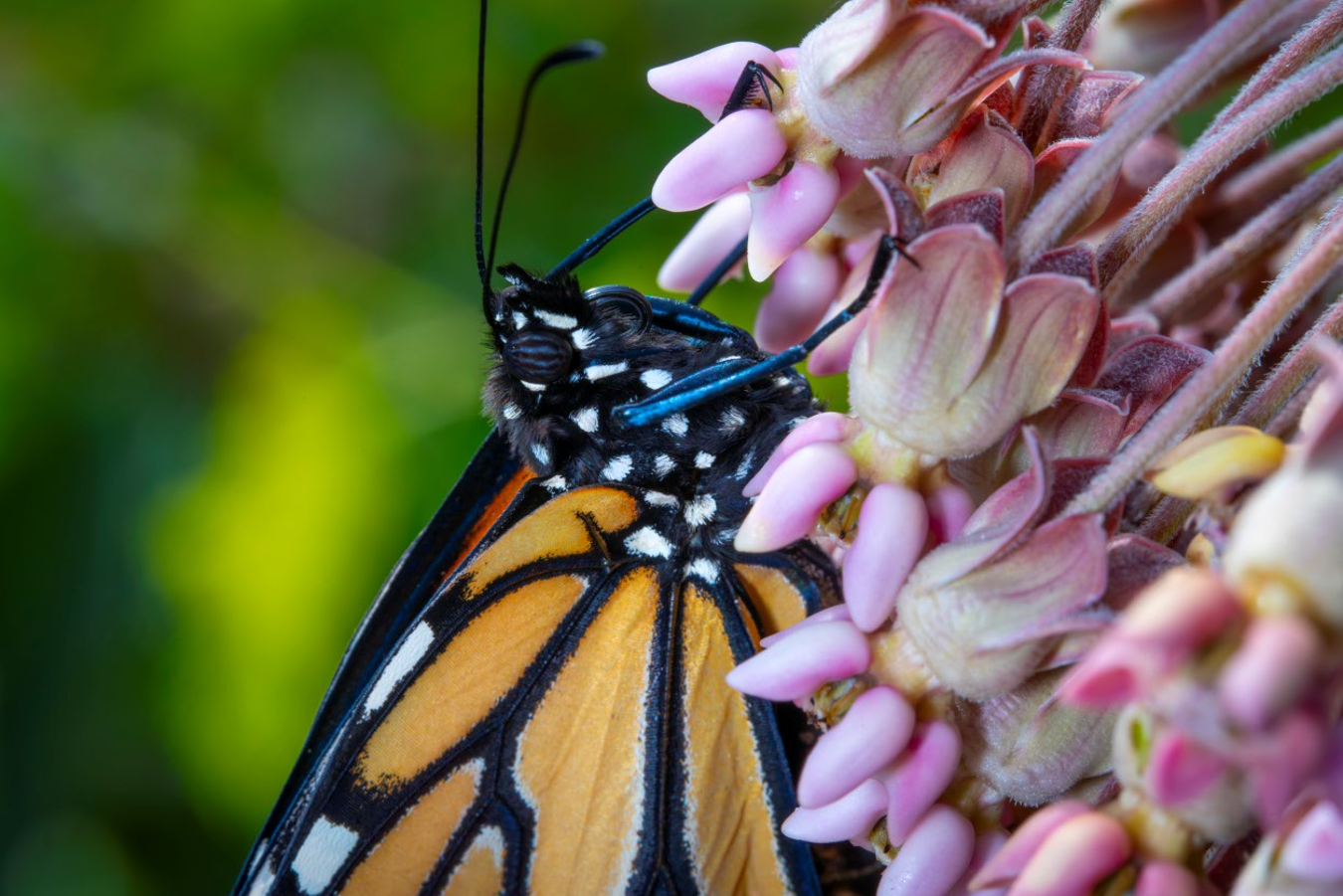
Monarch Butterflies of Northern Michigan
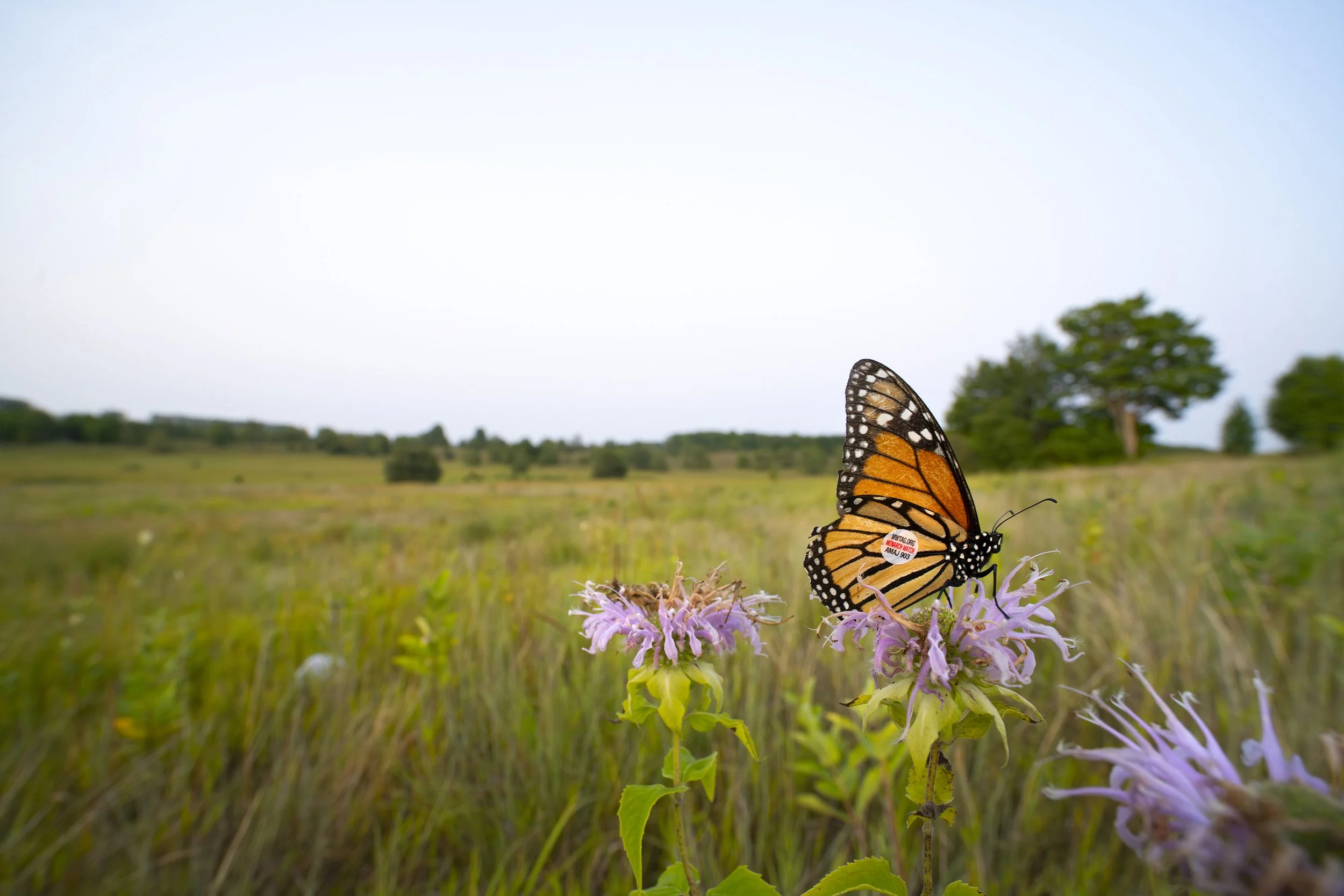
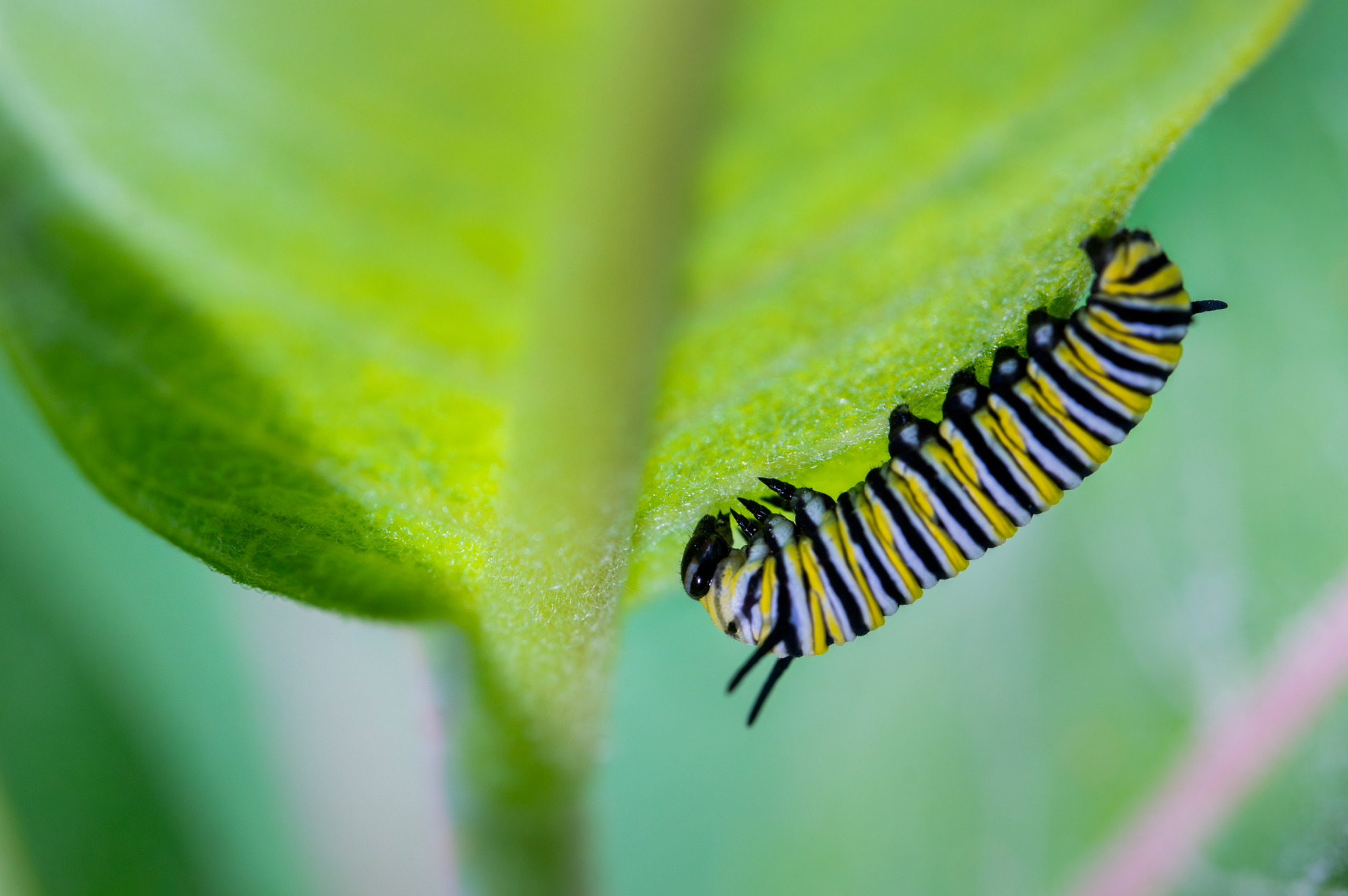
Monarch butterflies are among North America's most recognizable insects, but their populations have declined substantially across the United States in recent decades. These remarkable pollinators undertake one of the longest insect migrations in the world, with monarchs from the eastern population traveling thousands of miles between their breeding grounds across the United States and Canada and their overwintering grounds in central Mexico. Northern Michigan lies along an important migration corridor, where monarchs depend on milkweed for reproduction and diverse, nectar-rich native flowers to fuel their journey south. Habitat loss, declining milkweed and nectar resources, pesticide and herbicide use, climate change, and disease all contribute to the challenges facing monarch populations. Because multiple generations depend on connected habitats throughout their annual migration, conservation efforts in Northern Michigan can have impacts far beyond the region. Protecting and restoring native grasslands, meadows, shorelines, and other pollinator habitats provides essential breeding and migratory resources for monarchs while supporting countless other native insects that depend on the same ecosystems.
Our Research
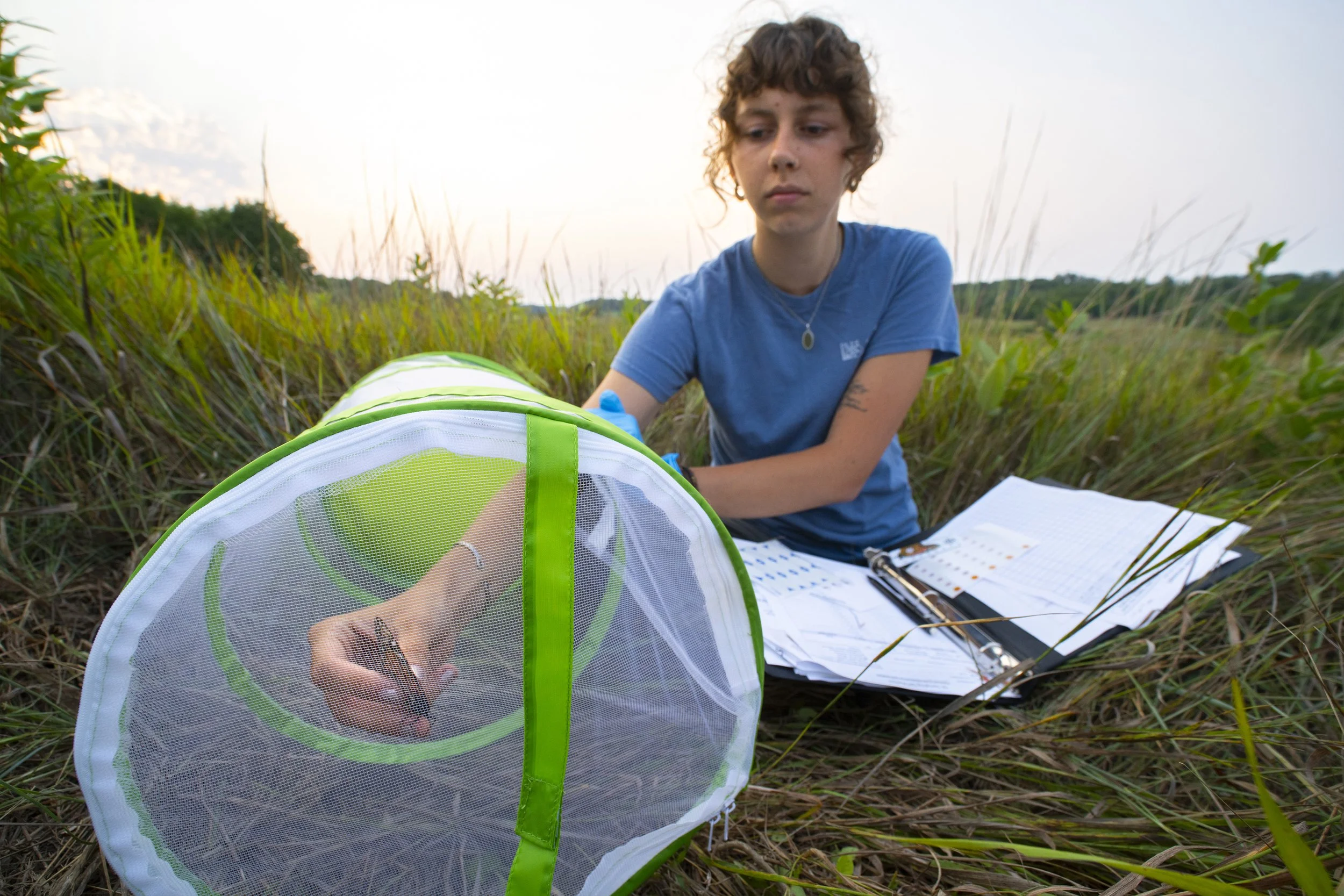
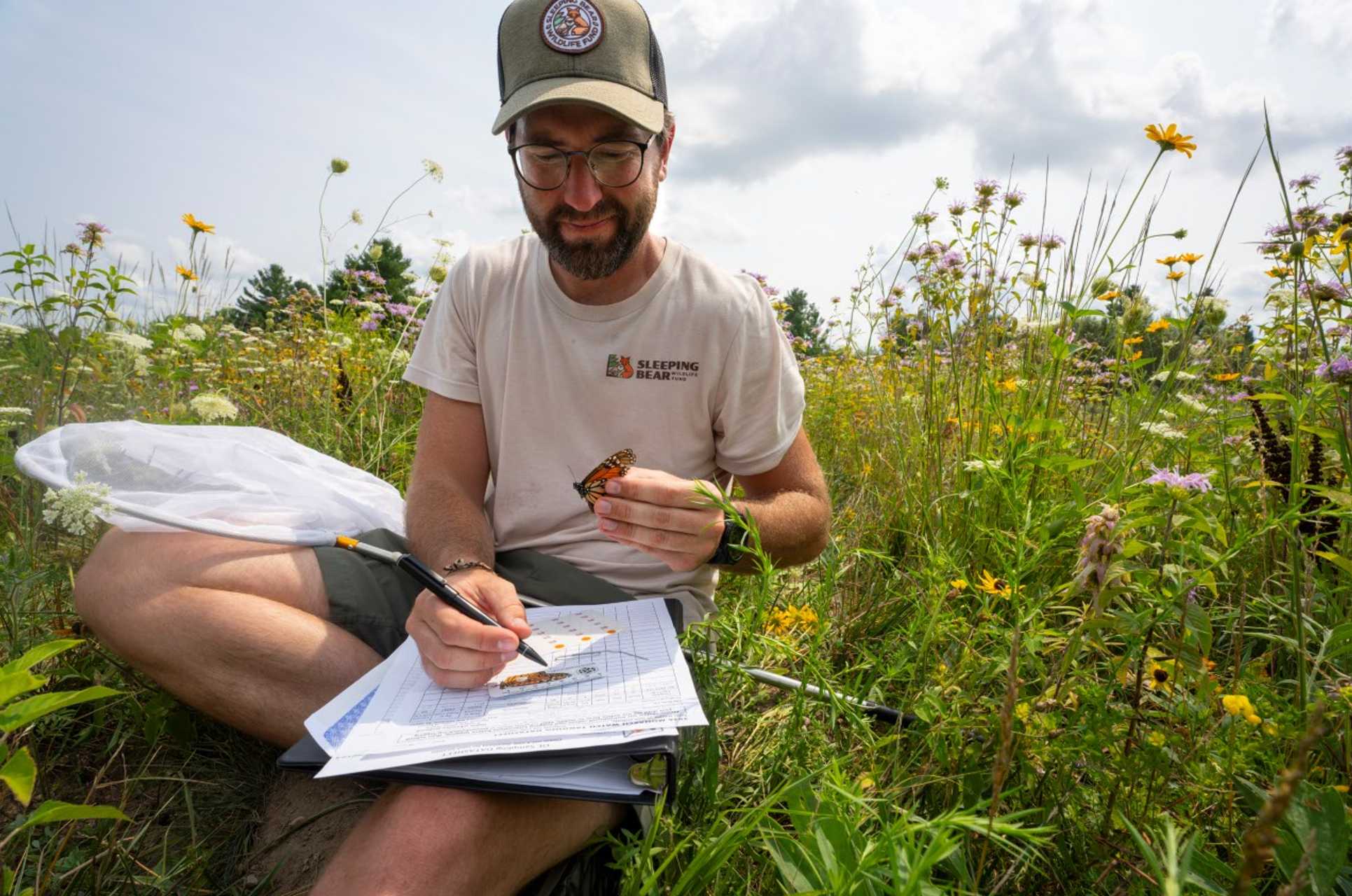
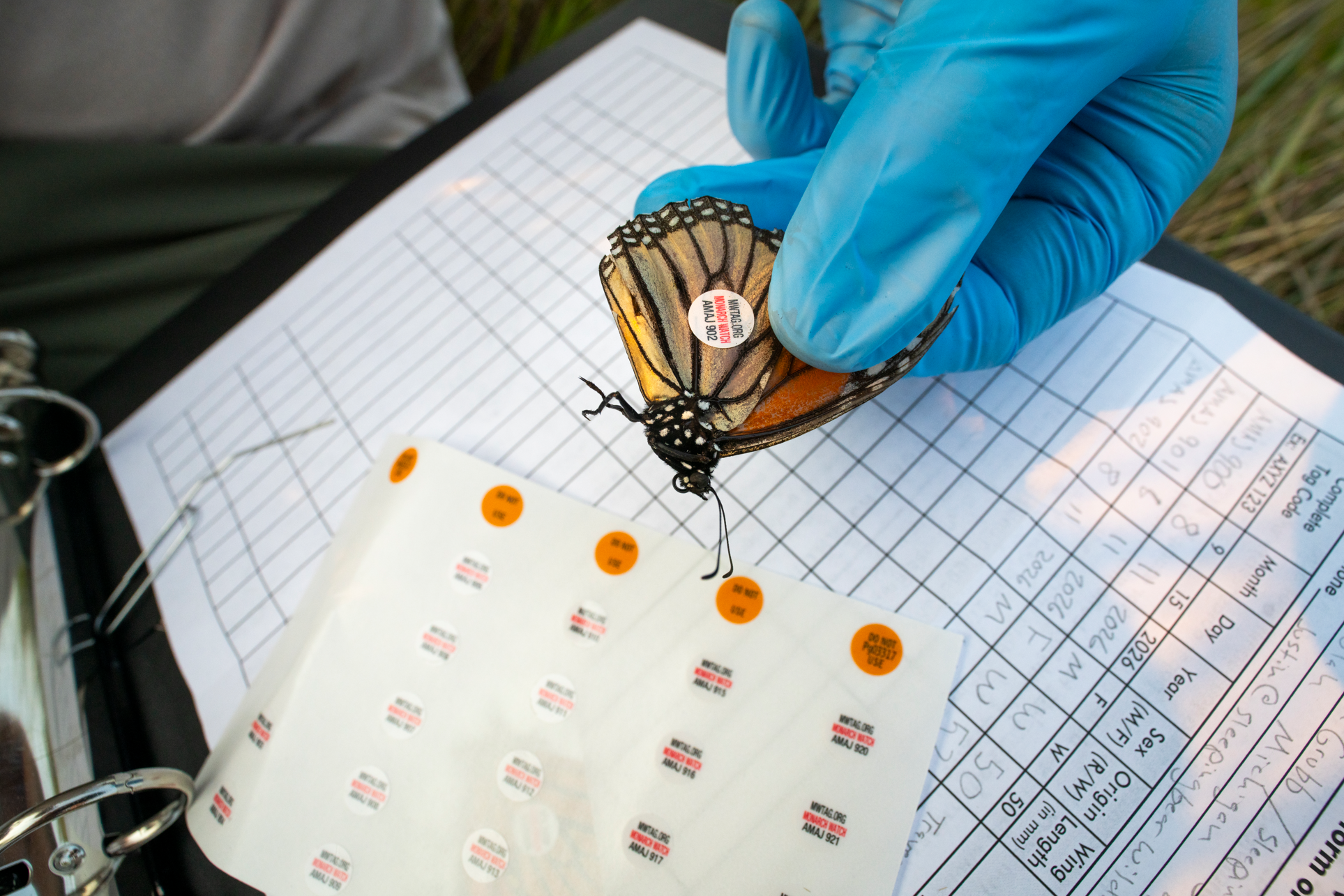
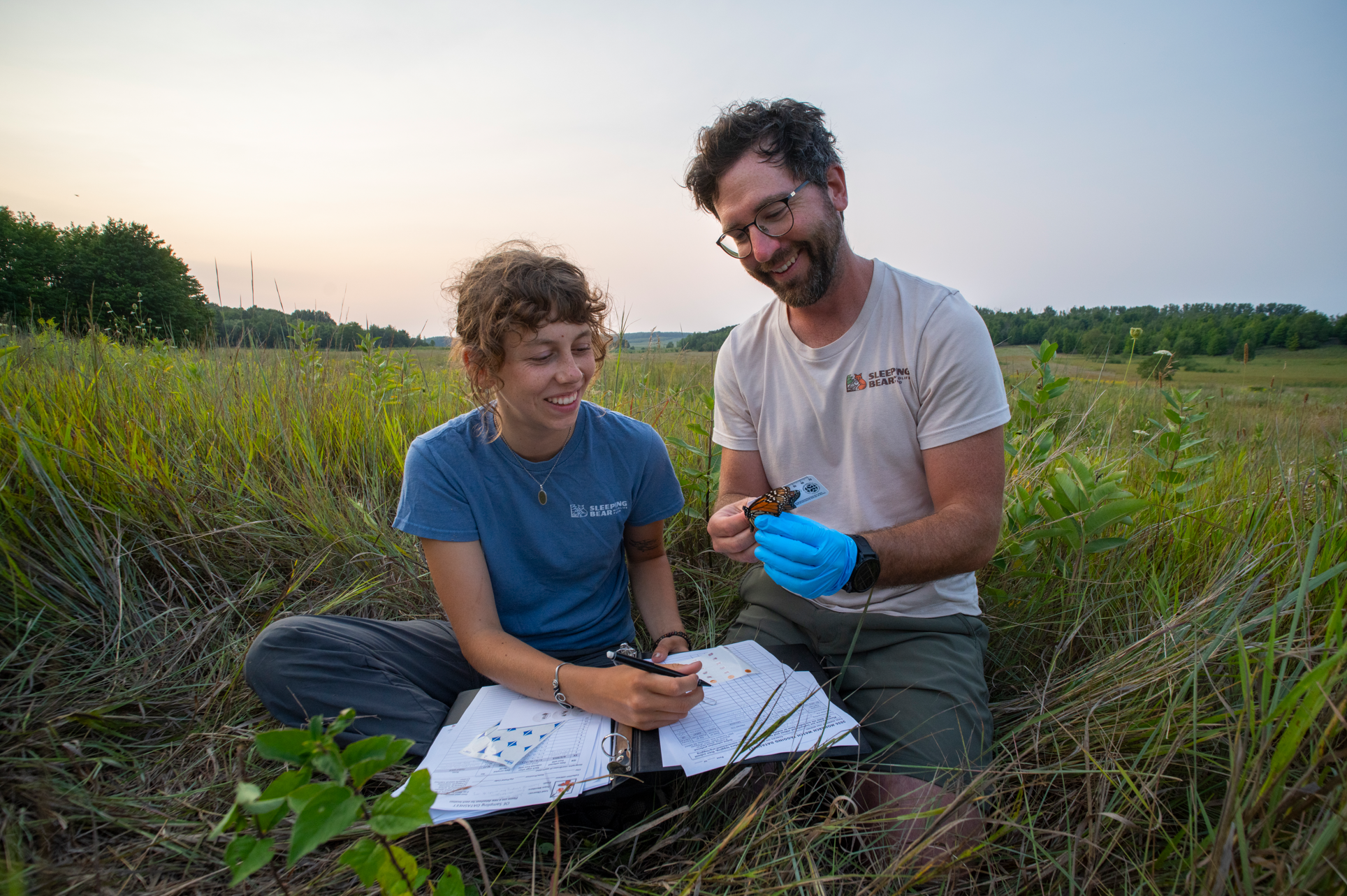
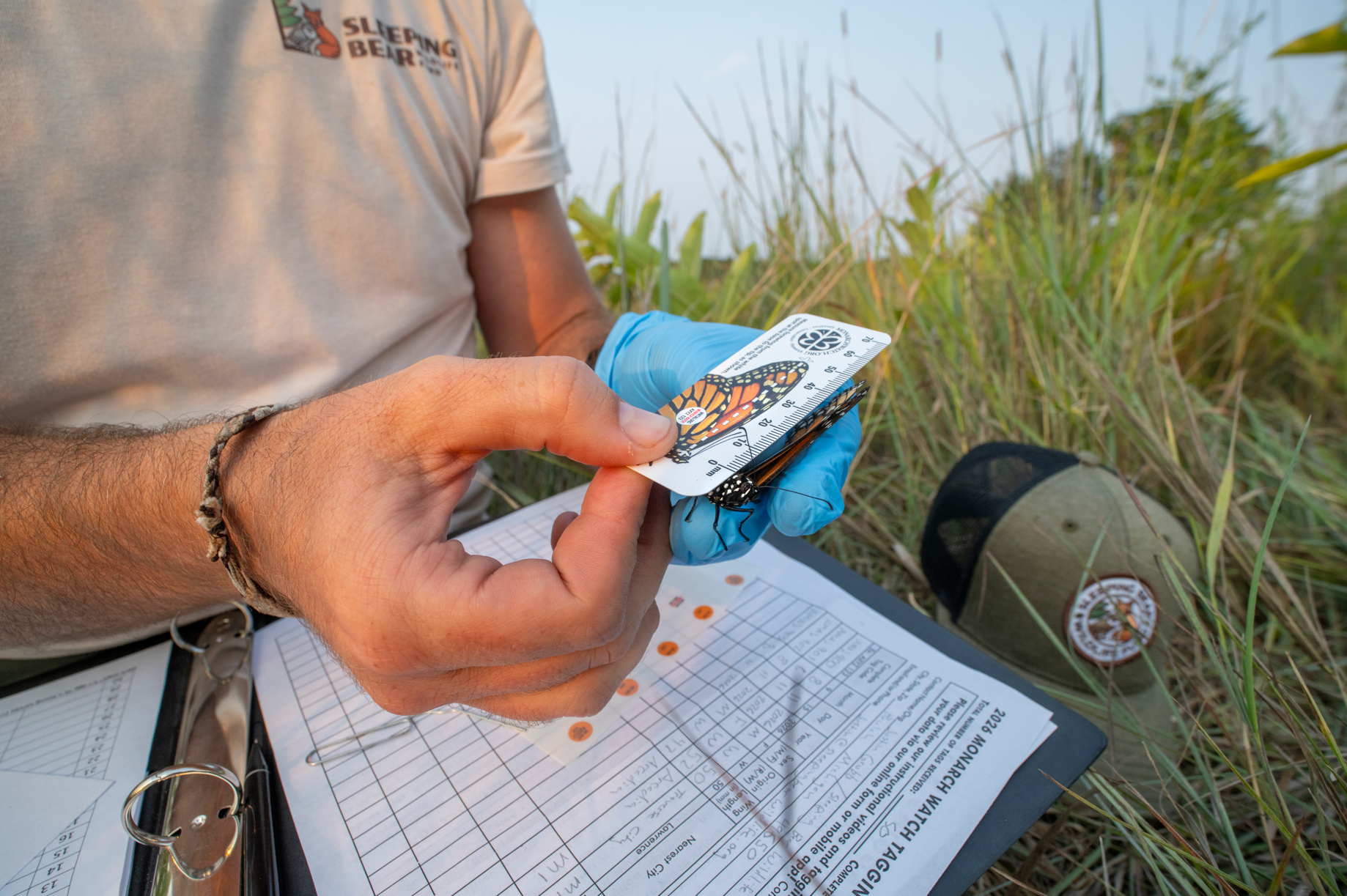
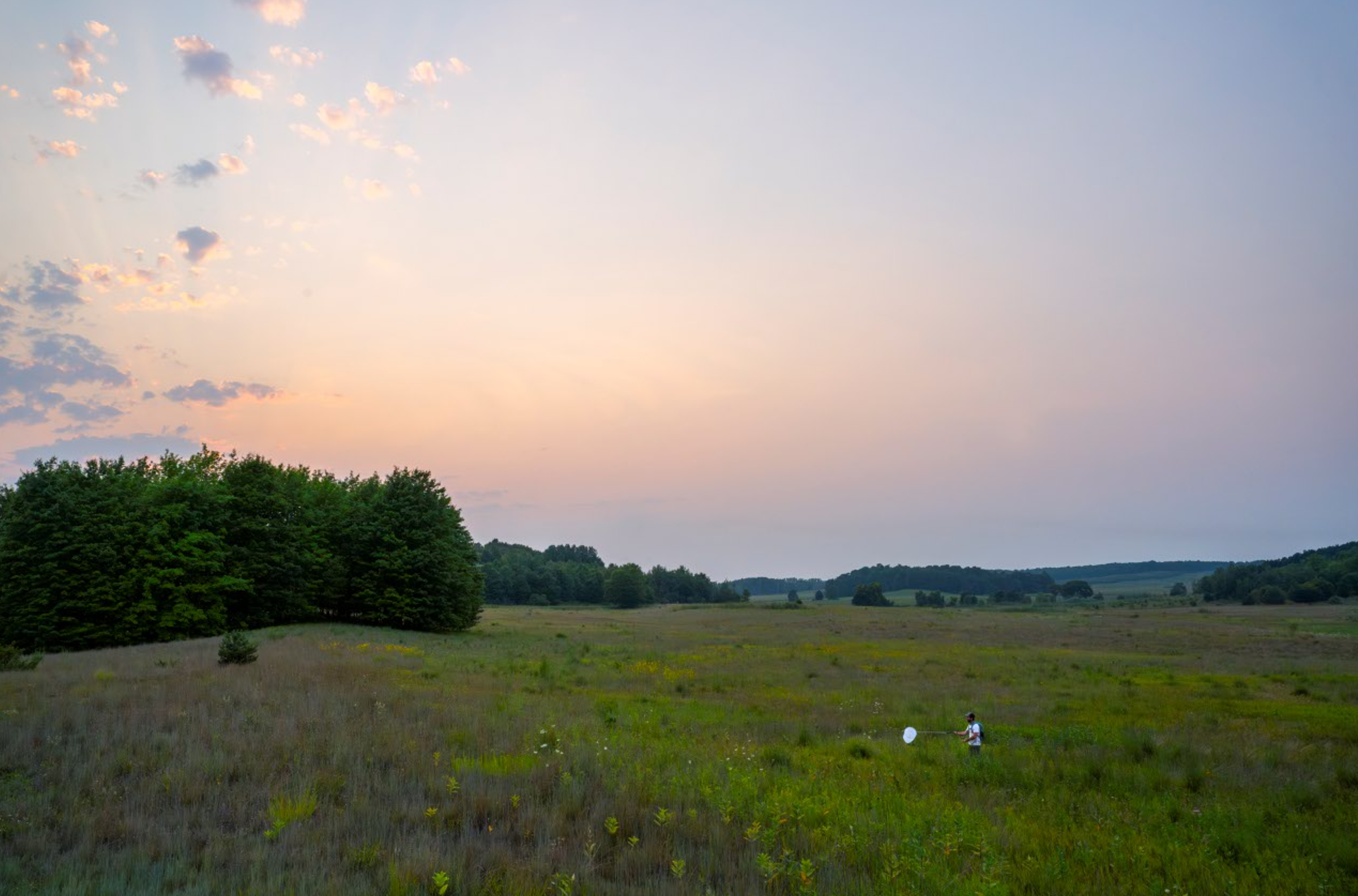
Sleeping Bear Wildlife Fund is working to better understand and protect monarch butterflies through research, monitoring, and community education across Northern Michigan. As part of regional conservation efforts, we assist with tagging monarchs to help researchers track their migration south and better understand migration routes, timing, and survival. Monarchs are also tested for Ophryocystis elektroscirrha (O.E.), a microscopic protozoan parasite that infects monarchs and can reduce their fitness, shorten their lifespan, and interfere with successful migration. Alongside this research, we engage students, families, and community members in monarch conservation by sharing the importance of protecting existing milkweed, planting native milkweed and nectar-producing wildflowers, and creating pesticide-conscious habitat where monarchs can successfully reproduce and refuel during migration. By combining research with hands-on education and habitat conservation, we hope to contribute meaningful information to broader monarch recovery efforts while empowering people to take action in their own communities. And this work is only beginning, with exciting new research, partnerships, and conservation initiatives on the horizon as we continue expanding our efforts to protect monarchs and other native pollinators.
This work is done in partnership with: