
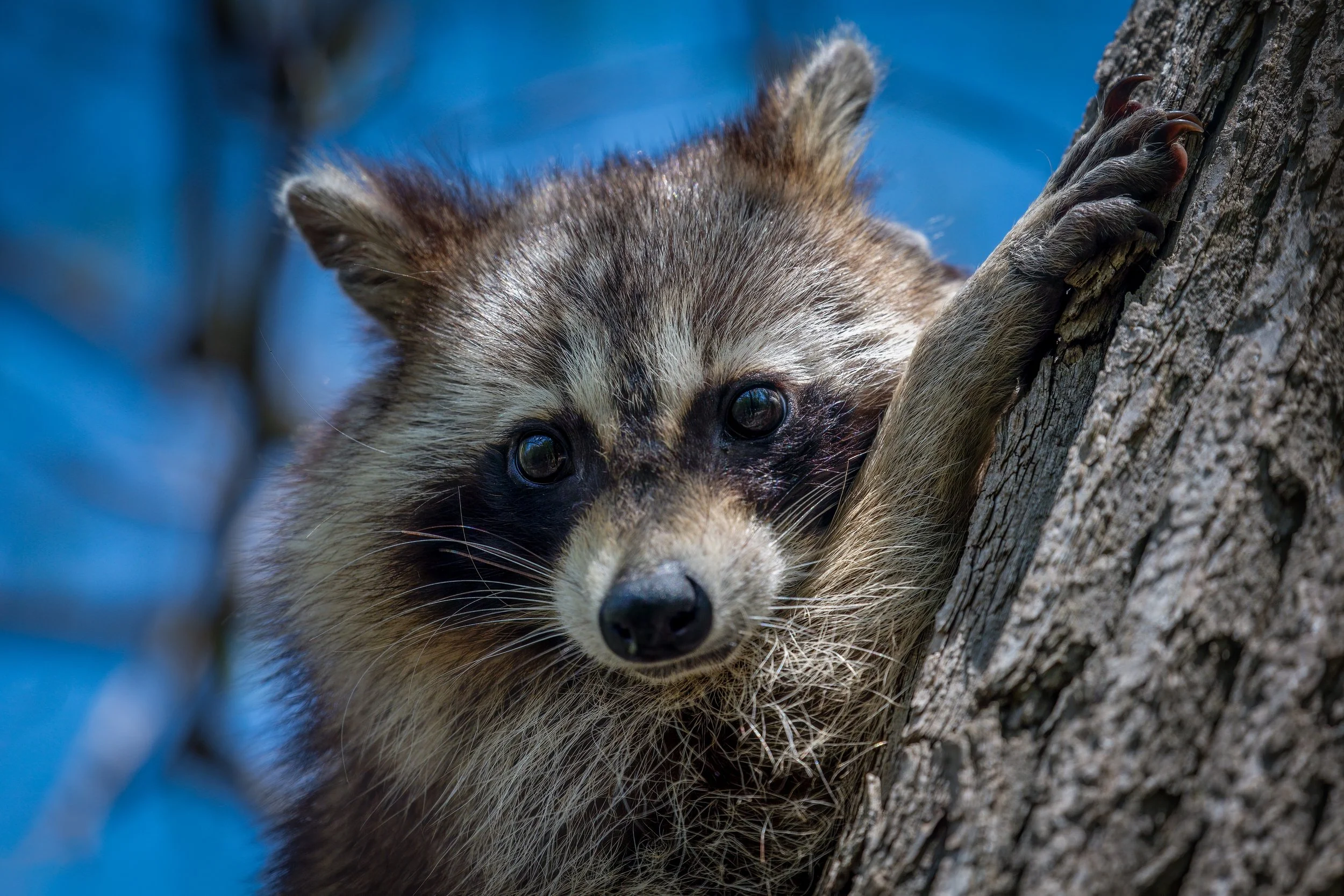
It’s not uncommon to stumble across a raccoon, whether you live in an urban or a rural area. These nocturnal mammals have adapted to thrive in both settings and, since they’re omnivores, they have lots of choices when it comes to food. They eat insects, nuts, berries and small rodents - but they’re perhaps most famous for their dumpster diving. Their dexterous, five-fingered-paws and climbing skills allow them to maneuver their way into garbage cans, through gates and into other closed off areas.
Since it’s typically dark when they’re looking for food, they use their keen sense of touch to determine what’s edible. This is why you see videos of them dunking food in water: though it might look like they’re “washing” the food, they’re actually getting it wet because this further heightens their sense of touch.
Do’s and Dont’s
Here are some basic do’s and don’ts if you find a raccoon living in or near your yard or outdoor space:
Do:
Keep your pets away from live animals and feces.
Fence off vegetable gardens.
Use animal-proof garbage cans.
Install motion-activated outdoor lights or audio repellents.
Lock pet doors at night.
Inspect the exterior of your home for holes or gaps and fix them - once you know the area has been vacated.
Don’t:
Deliberately feed raccoons.
Use mothballs or ammonia-soaked rags to repel them or any other wildlife. These contain toxic chemicals.
Trap and relocate them. This can be extremely stressful for the animal and may separate mothers and their babies, leaving unnecessary orphans. There are also a lot of laws around trapping and relocation and often requires special permitting.
Frequently Asked Questions
-
If you find a baby raccoon that is chattering, has no signs of injury, and is old enough that its eyes are open, wait until the next morning to see if the mother comes back overnight. Your first instinct might be to assume the baby is orphaned, but this often isn’t the case, and it has the best chance at life if it’s reunited with its mother. If the mother hasn’t come back by the next morning, however, contact a veterinarian or local wildlife rehabilitator.
If any of the following apply, on the other hand, don’t wait to call for help. Use gloves and place the baby in a box with a heating pad or heated water bottle and a towel. Do not feed the baby or give it water – this can make the situation worse.
The baby raccoon seems sick, injured or isn’t chattering.
It’s young enough that its eyes are still closed.
It’s been caught by a cat or dog (even if it doesn’t have any apparent injuries).
It has flies around it.
It has been constantly crying and hasn’t moved in more than 24 hours.
It’s shivering or seems cold.
-
If you suspect the raccoon living under your deck has babies, try to wait until they are old enough to leave the den – around eight to 10 weeks – to take action. At that point, they may switch locations, giving you the opportunity to seal off any openings once they’re gone. To make sure they’ve vacated the area, place a balled up bunch of newspaper in the suspected entry point and wait a few days to make sure it hasn’t been disturbed.
You might also consider spreading natural deterrents, like cayenne pepper or apple cider vinegar, around the area. If you’re confident there are no animals remaining under your deck, dig around the perimeter of it and install a metal mesh barrier.
-
For the most part, you’ll want to follow the steps outlined above for raccoons under the deck. Use the same bunched up newspaper method to make sure there are no more animals in your attic, and then fix the entry point. If waiting isn’t a possibility, try playing loud music in the attic or turning on bright lights to speed up the process. Apple cider vinegar can also serve as a natural deterrent in the attic, too.
-
If your cat or dog has come into contact with a raccoon, consult your veterinarian immediately. As a preventive measure, always make sure your pet’s rabies and distemper vaccines are up to date.
-
According to the Centers for Disease Control and Prevention (CDC), raccoons are responsible for 30% of the rabies cases reported in the U.S. This is why it’s important to always wear gloves and protect yourself against bites and/or scratches when handling baby raccoons. Adult raccoons should not be handled, since they can be less predictable.
Distemper and raccoon roundworm (often found in their feces) can also be present in raccoons, therefore it is best to give them space and call professionals if needed.
Coexisting with raccoons is all about understanding their behavior and taking the right precautions to prevent conflicts. By securing trash, protecting gardens, and using humane deterrents, we can reduce unwanted encounters while respecting these resourceful creatures. If you come across a baby raccoon, patience is key—its best chance at survival is with its mother, unless it’s clearly sick or injured. For raccoons in attics or under decks, safe and ethical exclusion methods are the best approach. And if your pet has an encounter, always consult a veterinarian as a precaution. With a little knowledge and care, we can peacefully share our spaces with wildlife while keeping both animals and people safe.
WE ARE CURRENTLY UNABLE TO TAKE RACCOONS AT THIS TIME BUT CAN PROVIDE ADDITIONAL INFORMATION TO HELP MITIGATE ISSUES AND MAXIMIZE THE RACCOONS CHANCES OF SURVIVAL.
Article written by Hillary Crawford